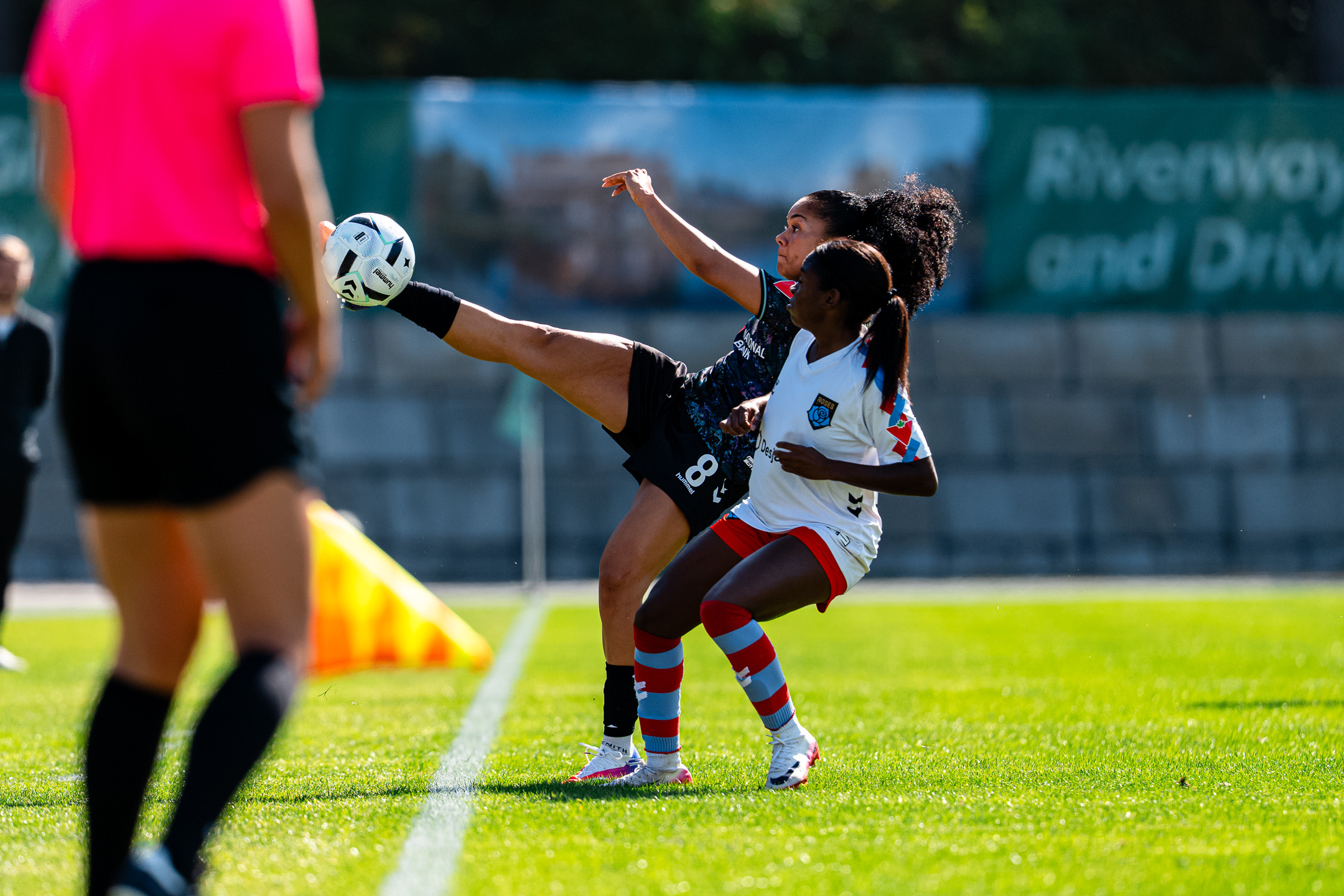
Vancouver Rise picked up their first win of the season, a 2-1 victory over Halifax Tides on Monday, in a result that felt like a long time coming.
The football wasn't flawless. Halifax still created pressure, especially late in the match. Vancouver looked scrappy at times, within moments where they looked vulnerable defending crosses and set pieces. For all their efforts, though, for the first time this season, Rise looked emotionally connected to the version of themselves they have been trying to become.
There was intensity to the performance. Structure. Urgency. Most importantly, there was resilience after setbacks instead of hesitation.
Honestly, you could feel the relief afterward.
“I think it was obvious that it was a big relief for us to have this victory now,” head coach Anja Heiner-Møller said post-match. “I think the team has been amazing in this really, really hard period at this beginning part of the season.”
That honesty probably captured the mood around Vancouver better than the scoreline itself.
The opening weeks of a season can distort everything emotionally. Teams start questioning themselves faster than they should. Performances begin feeling heavier. Every missed chance suddenly feels symbolic of something larger. Vancouver had spent the opening stretch searching not only for points, but for proof that the ideas behind this group would eventually click.
Against Halifax, they finally looked closer to that point.
The tactical shift stood out immediately. Heiner-Møller deployed a 3-4-3 formation for the first time this season, and the shape instantly gave Vancouver more width and fluidity moving forward. The wide areas became central to almost every dangerous attack, particularly down the right side, where Tori Tumeth and Anna Bout repeatedly stretched Halifax’s defensive line.
The difference was not simply tactical, though. The energy looked different, too.
Vancouver pressed higher, moved the ball faster and looked far more decisive once they entered attacking areas. Even physically, they seemed more willing to embrace the chaos of the match rather than retreat from it.
“To sum it up, I think it was just a big shift by all of the team,” Tumeth said afterward. “I think the first two performances weren’t what we wanted and where we want to be as a team. And I think we reflected during both weeks and kind of came together, and today you saw a team that was united.”
That feeling of unity became especially visible after Halifax equalized midway through the second half.
Before that, Vancouver had controlled long stretches of the game. Halifax nearly scored early through Jordyn Rhodes, whose header drifted just wide, but Rise FC gradually settled into the match. Defensive interventions from Sura Yekka and Yuka Okamoto prevented dangerous moments from developing inside the box, while the midfield began winning second balls more consistently.
Then came the breakthrough.
The opening goal in the 37th minute was probably Vancouver’s best attacking sequence of the season so far. Tumeth threaded a pass perfectly down the line for Bout, who drove aggressively into the penalty area before cutting the ball back across goal for Jessica De Filippo arriving late into the box. Her first-time finish into the bottom corner gave Vancouver the lead and instantly changed the emotional rhythm of the match.
For De Filippo, the moment felt important. After scoring seven goals last season, getting her first of 2026 off her shoulders mattered.
Vancouver kept pushing afterward instead of protecting the lead.
That confidence was noticeable. So was the composure of debut goalkeeper Jessica Wulf, who looked calm throughout her first professional appearance. Her handling was clean, positioning steady and late in the match, she commanded her box confidently while Halifax chased another equalizer.
Heiner-Møller praised both Wulf and substitute debutant Mia Pante afterward.
“They were two players that we got in that did really well,” she said. “I think the team did a good job getting them integrated.”
Vancouver finally looked interconnected as a group rather than a team still learning itself in real time.
Still, the match changed in the 57th minute when Rhodes bundled home from a crowded corner sequence to level the score for Halifax. In previous weeks, that moment may have rattled Vancouver emotionally.
Instead, they responded almost immediately.
Just two minutes later, Tumeth drove into the penalty area and drew a foul that earned Rise FC a penalty. Quinn stepped up and calmly converted for their first goal of the season, restoring Vancouver’s lead before Halifax could fully build momentum from the equalizer.
That response may have been the most revealing part of the afternoon.
“We did what it took to get the three points, and that just sums us up as a team,” Tumeth said. “We’ve shown a lot of heart.”
There really was heart to the performance. Not polished dominance. Just a team refusing to emotionally collapse when the game became difficult.
Late on, Halifax pushed aggressively for another equalizer, delivering dangerous balls into the area and forcing Vancouver deeper defensively, but Wulf continued handling crosses confidently, while the defensive line stayed organized enough to protect the lead through the final minutes.
Strangely enough, every Rise FC goal this season has now come while wearing the club’s new away kit, turning an otherwise small detail into an early-season superstition supporters may already be clinging to.
The statistics themselves actually reflected a relatively balanced match. Halifax finished with more shots and more corners, while Vancouver committed 14 fouls and spent stretches absorbing pressure. In the end, the emotional feeling of the match still belonged to the Rise.
This was about more than the table. It was about finally seeing evidence of what this group could become.
Tumeth’s comments afterward probably captured that best, too.
“We can see it’s coming,” she said. “And I think in patches, we saw it in the first game, in the second game. So it’s just about putting all the pieces together.”
That is the thing about early-season wins. Sometimes they are valuable not because they solve everything, but because they allow a team to breathe again.
For Vancouver Rise, this one felt like a reminder that the version of themselves they have been searching for may finally be starting to appear again.