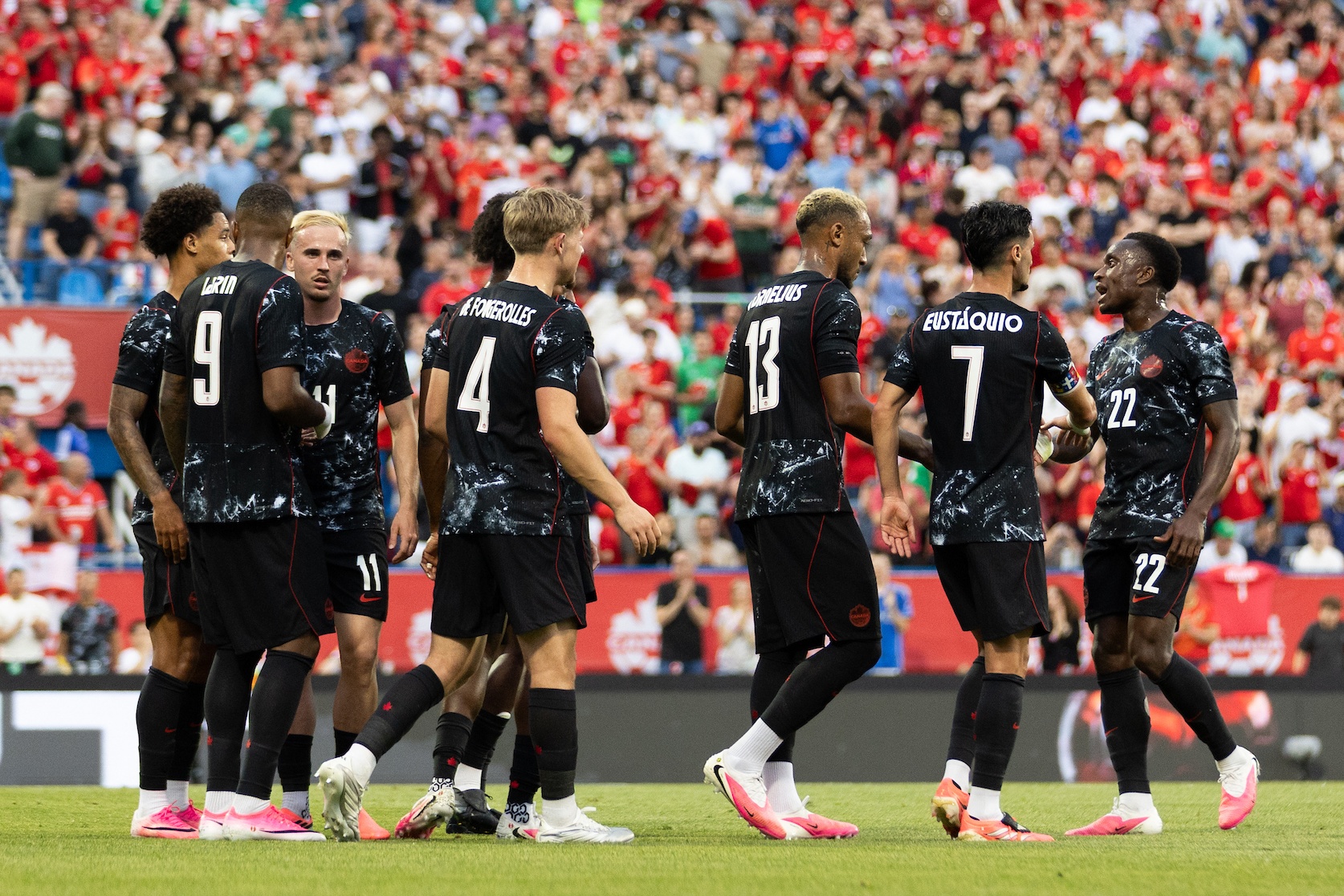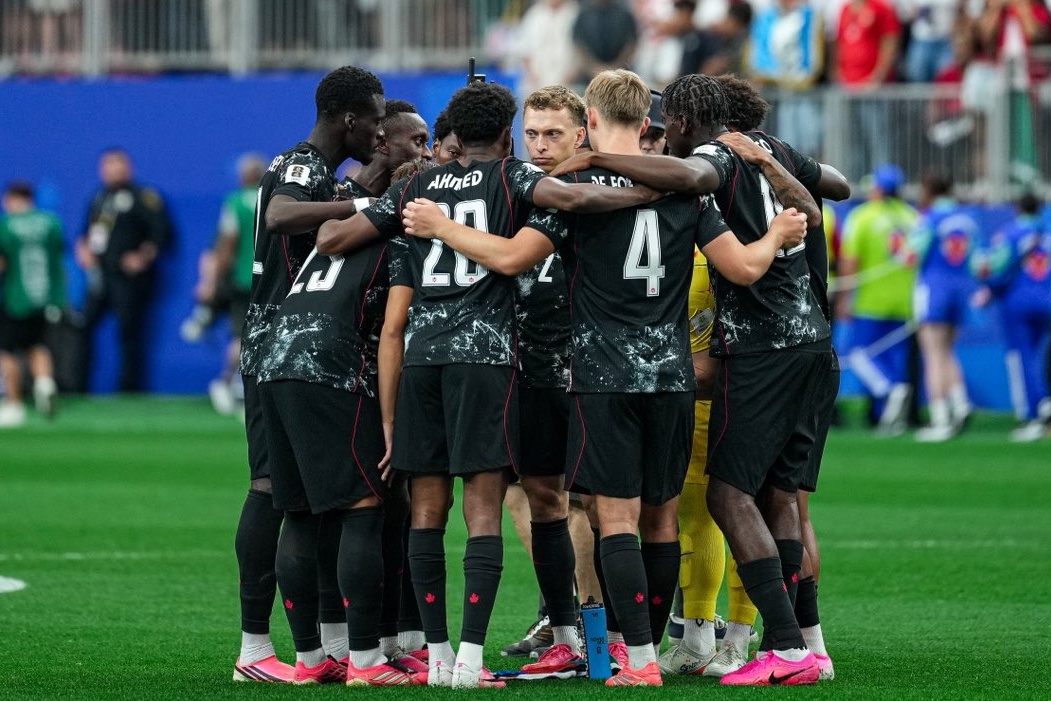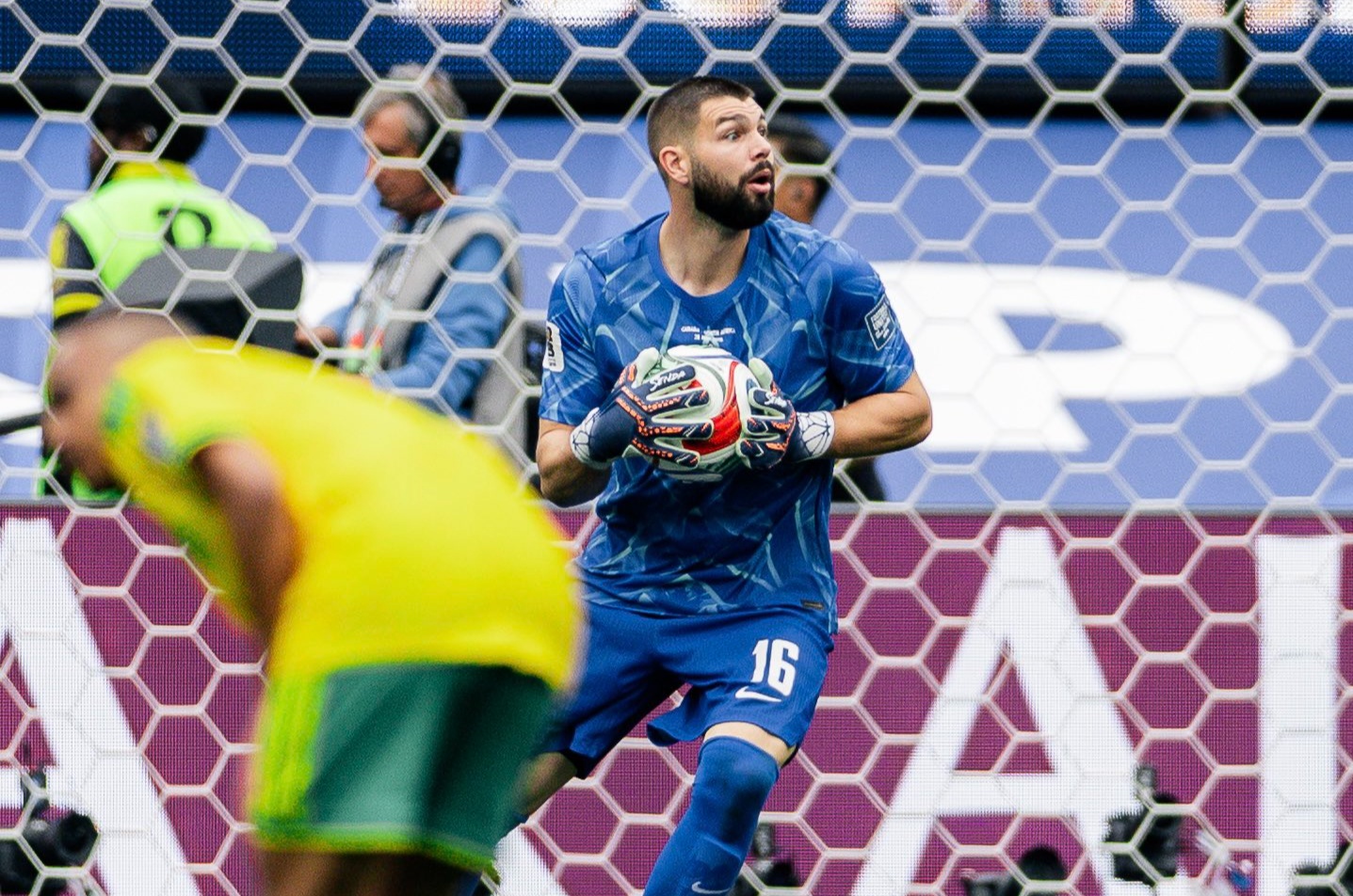


Canada will face Qatar in Vancouver, BC, in a pivotal second match in World Cup Group B action. Derisively known as the Group of Life by some observers, the group is wide open after both teams' opening matches finished with 1-1 draws. If there is one takeaway from the teams' respective matches, it is that Qatar appeared quite happy with their point against Switzerland, while Canada felt as though they had left two points on the table in their draw with Bosnia and Herzegovina.
Canada will be the more rested of the two teams, with 24 hours more than Qatar to recover from their respective first matches, albeit Canada will have needed to adjust to a three-time zone difference.
The only previous match between Canada and Qatar was a friendly held in Vienna, Austria, on 23 September 2022 ahead of the World Cup hosted by Qatar. Canada prevailed 2-0 that day on the strength of goals from Jonathan David and Cyle Larin.
Fans and pundits alike appear to be overlooking the Qataris in this group. It certainly looked as though the Swiss were not expecting the defensive resistance put up, let alone the late pushback by the underdogs from Qatar. Qatar is a team you simply cannot take for granted, as the core of this side is experienced and has played together for nearly six years. Canada will need to play the full 90 minutes without any let-up, as Qatar will not quit, as the Swiss learned the hard way.
However, Qatar's last-gasp draw with Switzerland changes little for Canada as far as their group strategy may be concerned. Canada were always looking at this showdown with Qatar as the key matchup where securing three points was crucial to their goal of advancing to the round of 32, and that any aspirations of topping the group would then require securing a positive result against the favoured Swiss. The important element for Les Rouges is that their destiny remains in their own hands.
A quick look at Qatar
Qatar are defending Asian Cup champions, but they are winless in their most recent five matches, with three draws alongside losses to Ireland and Tunisia. The draw against the heavily favoured Swiss came as a bit of a shock given their form, but perhaps it should not have been, as the team's identity has always centred on its defensive solidity and quick offensive transitions.
It is also noteworthy that all of Qatar's squad play professionally in the Qatar Stars League, with the lone exception of Homam Ahmed, who plays in the Spanish Segunda on loan with Cultural Leonesa. What Qatar lacks in pedigree they seek to make up for with familiarity and shared experience. As noted, the core of the team has played together internationally for quite some time, and their familiarity with one another is enhanced by playing against each other professionally for many years.
Qatar lacks the star power that most nations competing in the World Cup possess. Qatar's defensive foundation is personified by the presence of centre-back Boualem Khoukhi. Considered the spine of Qatar's defensive structure, Khoukhi has been tasked with organizing the back line and maintaining its discipline. Alongside his organizational skills, Khoukhi's strong aerial ability and one-on-one defending are crucial to his team's defence.
For some time now, Qatar's attack has revolved around the creative influence of two players: Akram Afif and Almoez Ali. Afif is the creative linchpin of Qatar's attack. Usually operating on the left side, Afif has better-than-average dribbling and passing skills and is the primary chance-creator for the Qatari attack. Ali is an intelligent player whose movement and link-up ability with Afif are important to finishing Qatar's attacking play. His 60 goals for Qatar tops the country's all-time scoring list. The biggest threat these players pose to Canada's defence is their quick transition play.
Qatar lines up in a 4-3-3 that looks more like a 5-4-1 in practical application, and further evolves into a low-block 6-3-1 when under heavy offensive pressure.
How Canada come into the match
Canada entered their World Cup with many questions concerning the health and fitness of the squad, including players like Alphonso Davies and Moïse Bombito, who were expected to do much of the heavy lifting on the Canadian back line. Equally concerning has been the team's recent inability to score in open play. Their 1-1 draw with Bosnia and Herzegovina to start the tournament did not assuage these worries.
Canada manager Jesse Marsch appears to be taking a page out of the playbook of his predecessor John Herdman in being non-committal about Davies' status. Aside from the Herdman-esque tactical manoeuvring with the press corps, the signs appear to be pointing to Davies' inclusion in the match-day squad, but whether he sees minutes from the bench may come down to the requirements of the game.
Bombito, by all accounts, has returned to full training with the rest of the team, but it remains unlikely that he gets a start this week, and whether he sees minutes at all remains very much up in the air. With centre-back Alfie Jones having a recovery day and not training two days ahead of the match, his availability could be in question as well. Fortunately for Les Rouges, Luc De Fougerolles played well in Bombito's usual right centre-back spot against Bosnia and appears to be tapped once again to partner Cornelius on the back line.
Somewhat surprisingly, questions have been asked about whether Jonathan David gets the start against Qatar given his ineffectiveness and early withdrawal against Bosnia. In light of how Cyle Larin did not start the Bosnia match but was a crucial difference-maker off the bench, one can see how some wonder if the same tough love treatment for Canada's all-time scorer might prove to be the tonic he needs too.
However, it is doubtful that the same approach taken with Larin would have much impact on the even-keeled David. It is most certain that Jonathan David starts, but the question remains, as always, who will partner him. Tani Oluwaseyi got the surprise nod against Bosnia and played well in the early second half after a lacklustre first-half performance. Given his form and performance off the bench against Bosnia, it appears more likely that Larin will return to the starting XI.
The welcome return of Ali Ahmed to game action as a substitute against Bosnia has generated a renewed discussion of whether he starts ahead of either Liam Millar at left midfield or Tajon Buchanan at right midfield. However, Ahmed's 30-minute run-out was the most competitive action he had seen in nearly six weeks, and by his own admission after the game he was a bit rusty. It is more likely that Marsch stays with Millar and Buchanan, but he may be tempted to bring Ahmed off the bench earlier to again tap into his energy and penchant for sowing chaos against a tired opposition.
Keys to the Match for Canada
-
The Reds will need to maintain control over the midfield, as they are expected to do. In doing so, Ismaël Koné and Stephen Eustáquio, the starters in the middle of the park, and the wide midfielders — presumed to be Millar and Buchanan — need to limit the opportunities and effectiveness of Qatar in transition. They must starve service to Qatar's attacking weapons, Afif and Ali, all the while driving the Canadian attack forward. Expect Nathan Saliba to get his first minutes in the tournament in the second half.
-
Canada's back line cannot get caught out by Qatari counter-attacks. Top of mind will be whether Marsch will modify his favoured high defensive line. Marsch's tactics, while effective, entail a certain degree of risk, but they can be extra risky without the pace of Davies and Bombito anchoring the back line. This will especially be the case as Qatar's forwards are a shade quicker than those of Bosnia.
-
Goals, goals, goals! Canada's attack needs to find its scoring touch sooner rather than later. The midfield needs to be more creative, and the wide play needs to offer better service to the strikers. Another tool in the attacking arsenal that has been under-used is taking more strikes from distance. An early trend emerging in World Cup matches so far has been the increased number of shots attempted from range — a trend Canada would be well advised to emulate. Buchanan, Koné, and Millar have this in their locker and should reach into it more often. Canada has become somewhat predictable, with an attack that too often seems to be looking to bring the ball well inside the box before looking to finish.
-
Proficiency with set pieces always seems to come up with Canada, and for good reason. Against Bosnia, Canada had an overwhelming advantage in the number of set pieces taken, especially in terms of corners. However, attacking set pieces have again begun to appear stale and predictable. At no point did Canada mount a serious threat from a dead-ball situation. Conversely, it was from one of Bosnia's few offensive set pieces that their only goal was produced. Canada needs to shift this element back in their favour, especially when goals from open play are proving so elusive.
Projected XIs
Canada (4-4-2): Maxime Crépeau; Richie Laryea, Derek Cornelius, Luc De Fougerolles, Alistair Johnston; Liam Millar, Stephen Eustáquio, Ismaël Koné, Tajon Buchanan; Jonathan David, Cyle Larin.
Qatar (5-4-1): Mahmud Abunada; Homam Ahmed, Boualem Khoukhi, Issa Laye, Pedro Miguel, Ayoub Al-Oui; Akram Afif, Jassam Gaber, Karim Boudiaf, Edmilson Junior; Almoez Ali.
Game information and how to watch
📆 Thursday, June 18, 2026
⏰ 6:00 pm ET / 3:00 pm PT
📺 TSN, RDS, CTV
🧑⚖️ Cristián Garay (Chile)
🏟 BC Place, Vancouver, Canada