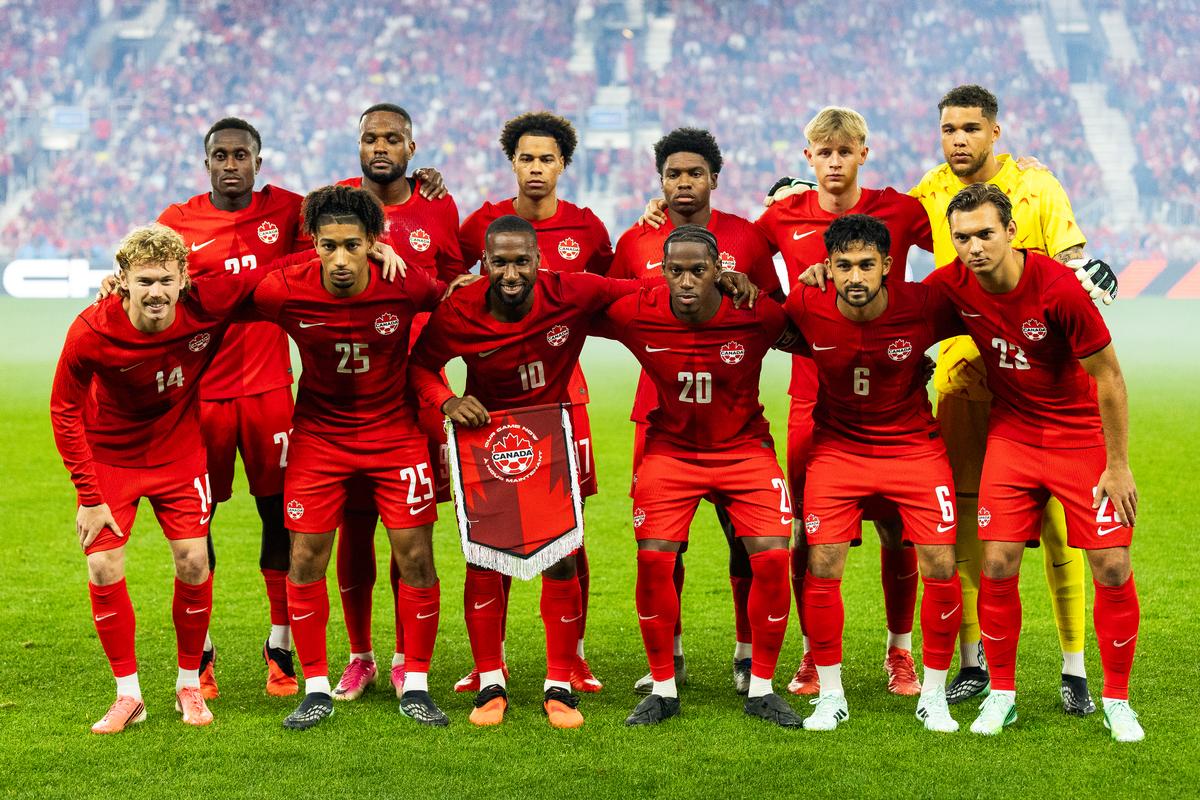
During Jesse Marsch's press conference on Monday, introducing his 32-man pre-tournament squad in Charlotte, North Carolina, he stated:
"One of the main goals that needed to be accomplished over the last two years, when I got the job, was we needed to develop a broader player pool."
I think it would be fair to say that the manager, whose contract was just extended to 2030 this week, has largely accomplished this goal. While stating that Canada's roster depth was better than ever, he also hinted that the unprecedented injury scourge that has been plaguing the squad had also brought about challenges.
But how much squad depth does Canada really have? In terms of quantity, there are more Canadian players playing professionally all over the world than previously. Quality, too, has improved markedly in many areas on the pitch in a manner that Canada has never previously boasted.
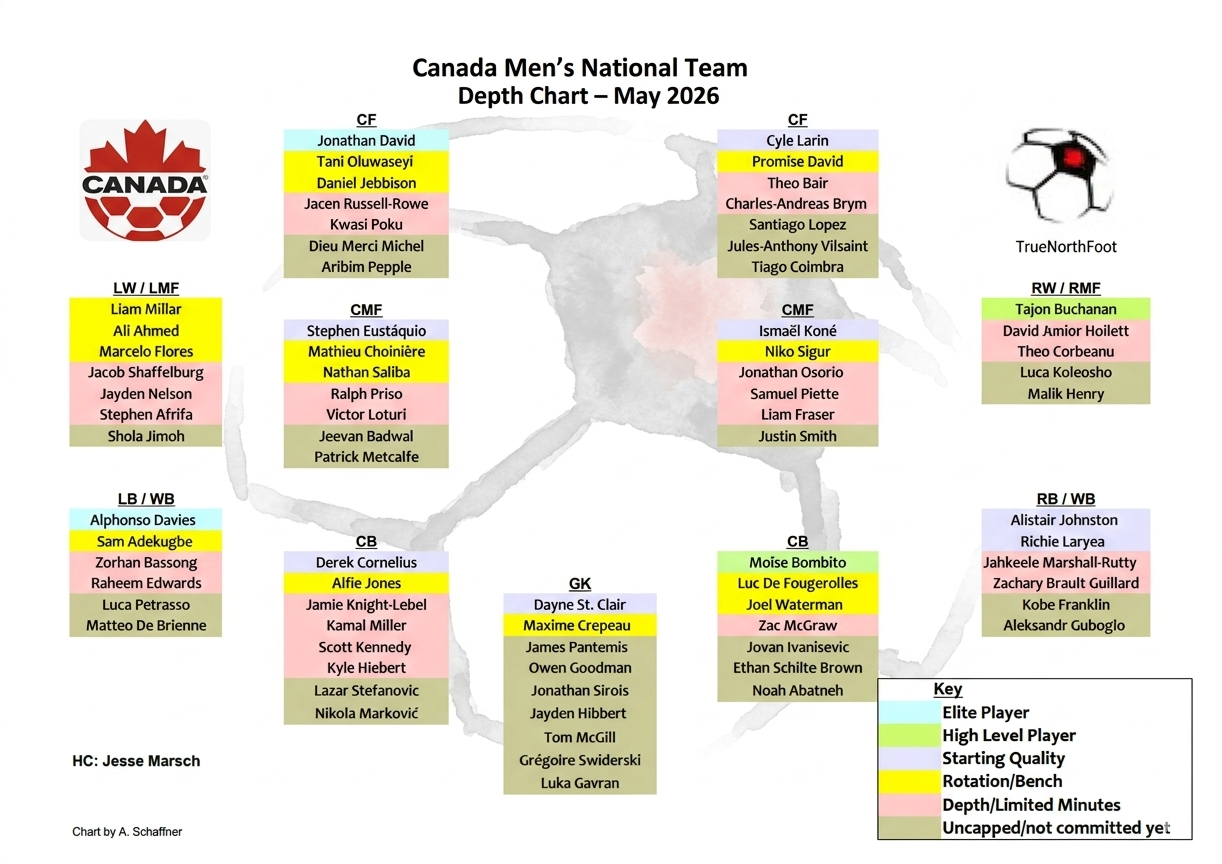
.jpg)
I first explored the nature and characteristics of Canada's squad depth in October 2024 when I created my initial Canada men's depth chart. In the short space of time since then, there has been real growth experienced by the men's programme, with 13 players dropped while 20 additions have been made to the current chart.
Criteria for assigning players
Players have been rated for where they stand within the Canada programme now, based on their performance over the past year or so, and are not based on their potential. Players rated are assigned a category in the chart, noted by colours. While this exercise is not, nor can it be, scientific, I have rated the players as objectively as possible using the following criteria.
There are several criteria applicable to all players in all categories. Many questions are asked of the players and their current and recent situations. Players are rated relative to the quality of the league they play in and the relative quality of the team they play for. Are the players starting regularly, or regularly coming off the bench with intermittent starts? Are they bench players who seldom feature?
Players are listed, generally, in their usual position, although it is acknowledged that many are versatile and do play other positions for both club and country. Where does the player stand within the CanMNT in the position or positions they play?
How does the current manager view the player, or how is it perceived the manager perceived to view the player? Has the player just begun their international career and played very little to date, or are they veterans who no longer feature as prominently?
For national team purposes, players have been classified according to where they might fit in Marsch's preferred 4-4-2 tactical formation. In his two years managing Canada, he has rarely strayed far from this setup. Players are listed as per their rating and not in any other preferential order. And finally, injuries, whether they be long-term in nature or not, do not affect their current ratings.
Additional criteria specific to each category have been applied as follows, with the first three sure to generate contentious debate among the national team's faithful followers.
Elite
This category is reserved for those playing for top clubs in a top-five league and who have been at this level for at least a year or more. Consideration is given to what their role on the team is. They should be regularly starting or considered impact substitutes by their club.
Internationally, would these players likely walk into the national teams of many top 20 nations globally? Only two players have made this select group so far. Despite Alphonso Davies' injury saga and Jonathan David's struggles adapting to his first year in Serie A after five highly successful seasons in Ligue 1, they both make the grade as elite players.
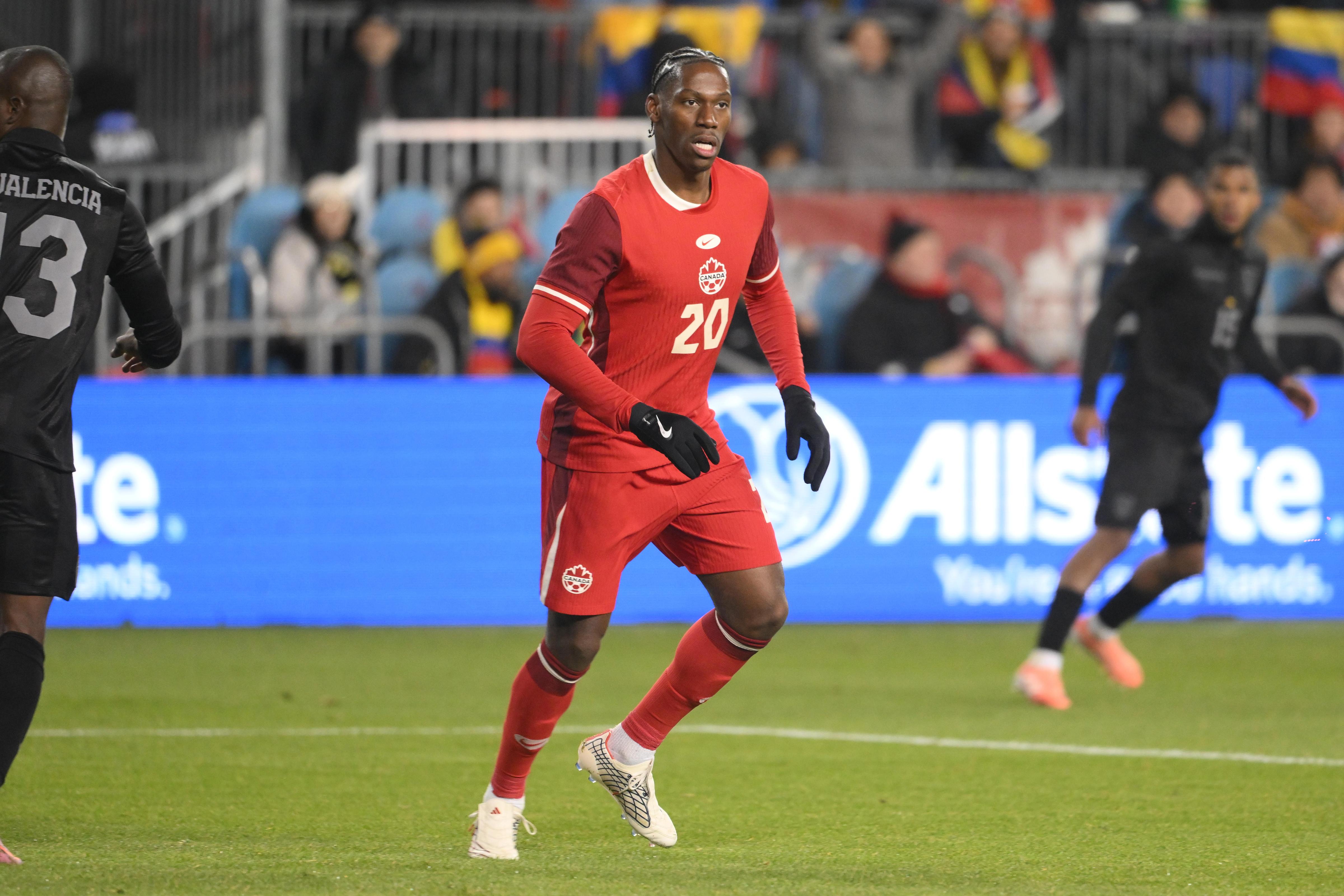
High level
These are players at a high-level club and league, but perhaps not fully established yet, or who have not played at this level consistently for more than a season. Consideration is given to their role with the club, and they would normally be starting regularly or among the first options off the bench.
Internationally, would these players walk into most top 40 national teams? Currently, I've identified just two players within this grouping, although a few players could aspire to this in the coming years. But for now, only Tajon Buchanan and Moise Bombito make this grade. Both could have reached elite levels with a bit of luck, especially about serious injuries, Tajon's two years ago and Bombito's over the last year.
Starting quality
Perhaps the most contentious category within this rating system, this is a category where players have often jumped up or fallen back from previous iterations of the depth chart. Generally, they are playing at a prominent club, but perhaps not in a top league. For the most part, these players will feature as a starter or among the first off their club's bench.
These players often or regularly start for the CanMNT when available for selection. Internationally, these players would walk into almost any team within Concacaf, ignoring various home country biases that may exist. Stalwarts like Stephen Eustáquio, Ismaël Koné and Alistair Johnston represent starting quality players.
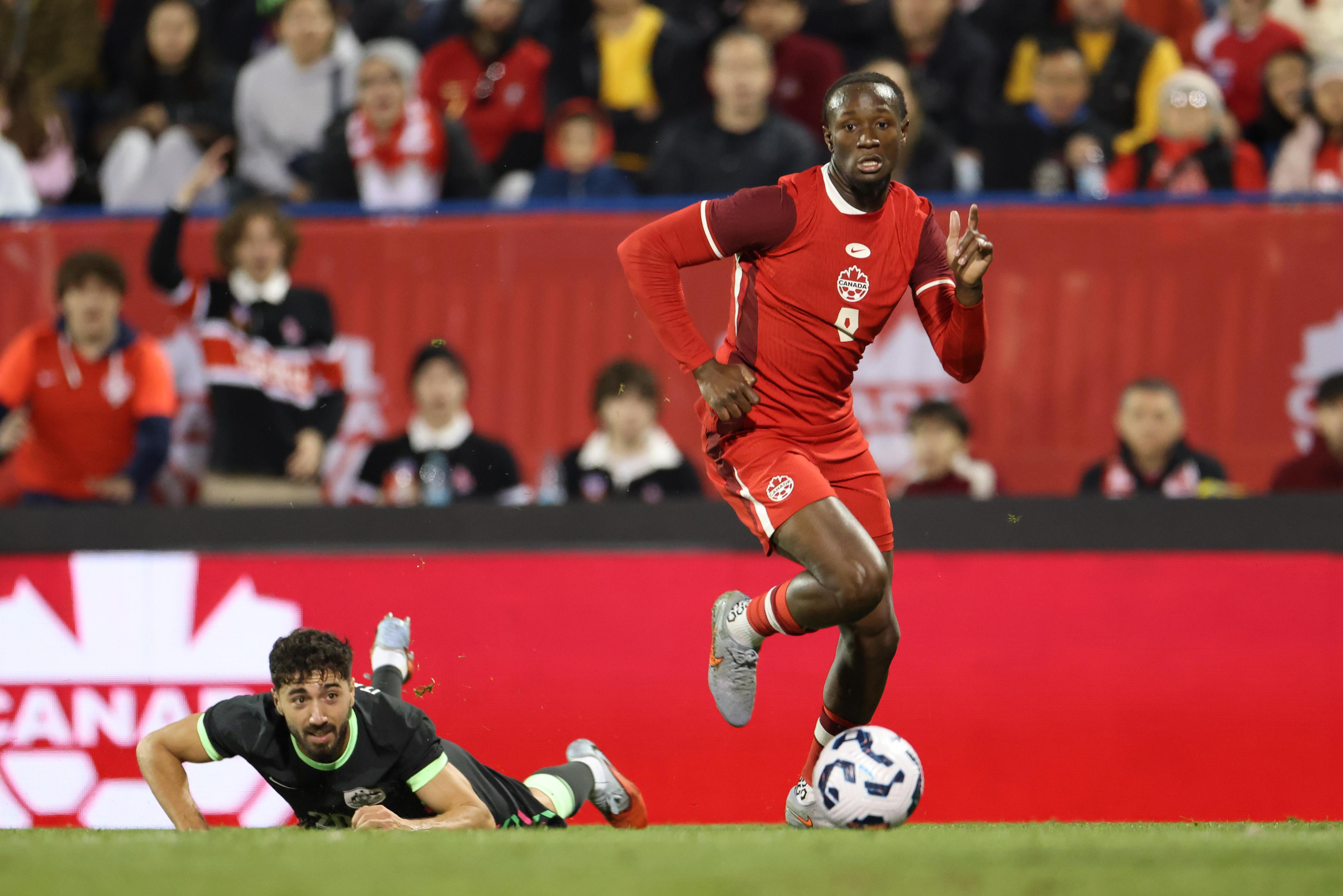
Rotation/bench
Generally, these players feature frequently for their club and perform well, or perhaps play at a high-level club but have yet to establish themselves at that level as a starter or regular off the bench.
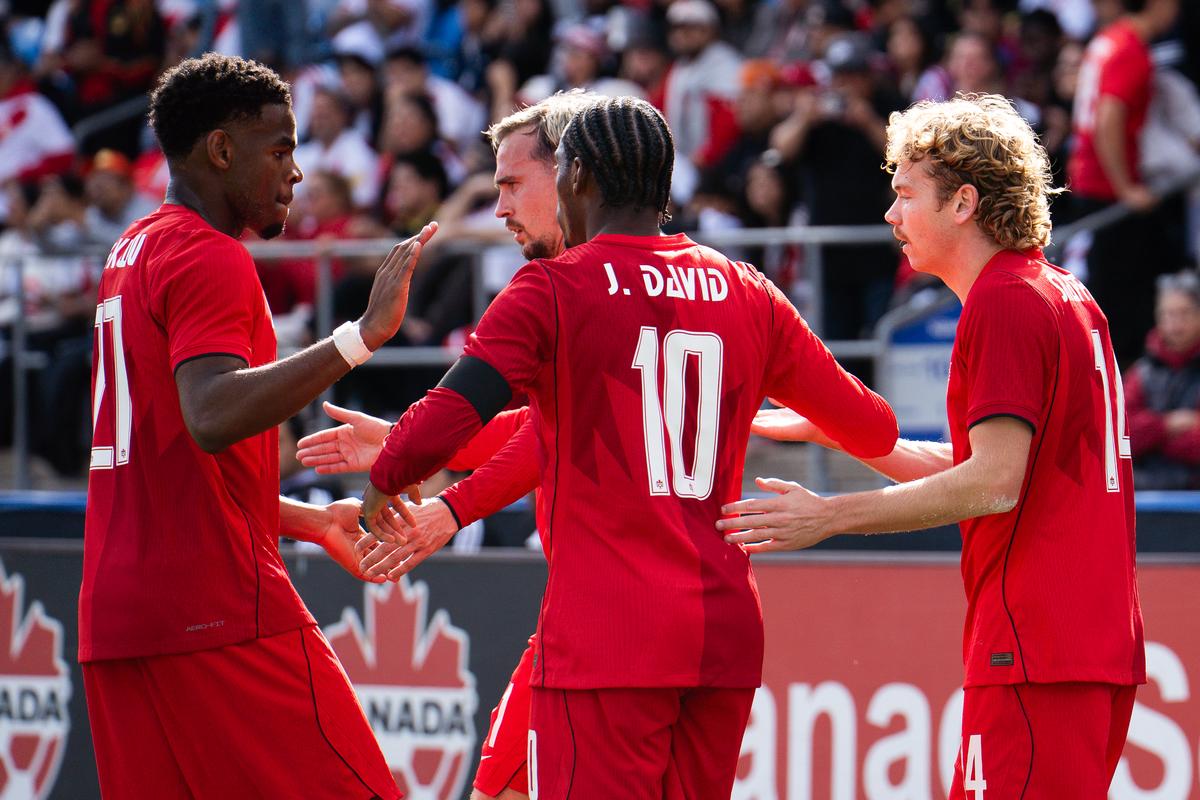
These players might be regular national team call-ups, but when they are called up, they may not feature too frequently as starters, though they are among the CanMNT's first players summoned as substitutes. Currently, talents such as Nathan Saliba and Promise David fit this description.
Depth/limited minutes
These players largely fall within the same criteria as rotational players from a club perspective. Often, these players have previously been capped by the CanMNT but are generally on the fringes of the national team setup at this time.
They may no longer receive regular national team call-ups, whether they are still new to the national team setup and yet to establish themselves meaningfully, or perhaps they are nearing the tail end of their careers, where they may soon become an afterthought within the programme.
Their national team performances might be decent, but they lack consistent quality, and there are better players ahead of them. At this level, such players are frequently just selected to fill a void when players ahead of them are injured or otherwise unavailable for selection. Examples include Jayden Nelson, Junior Hoilett and Ralph Priso.
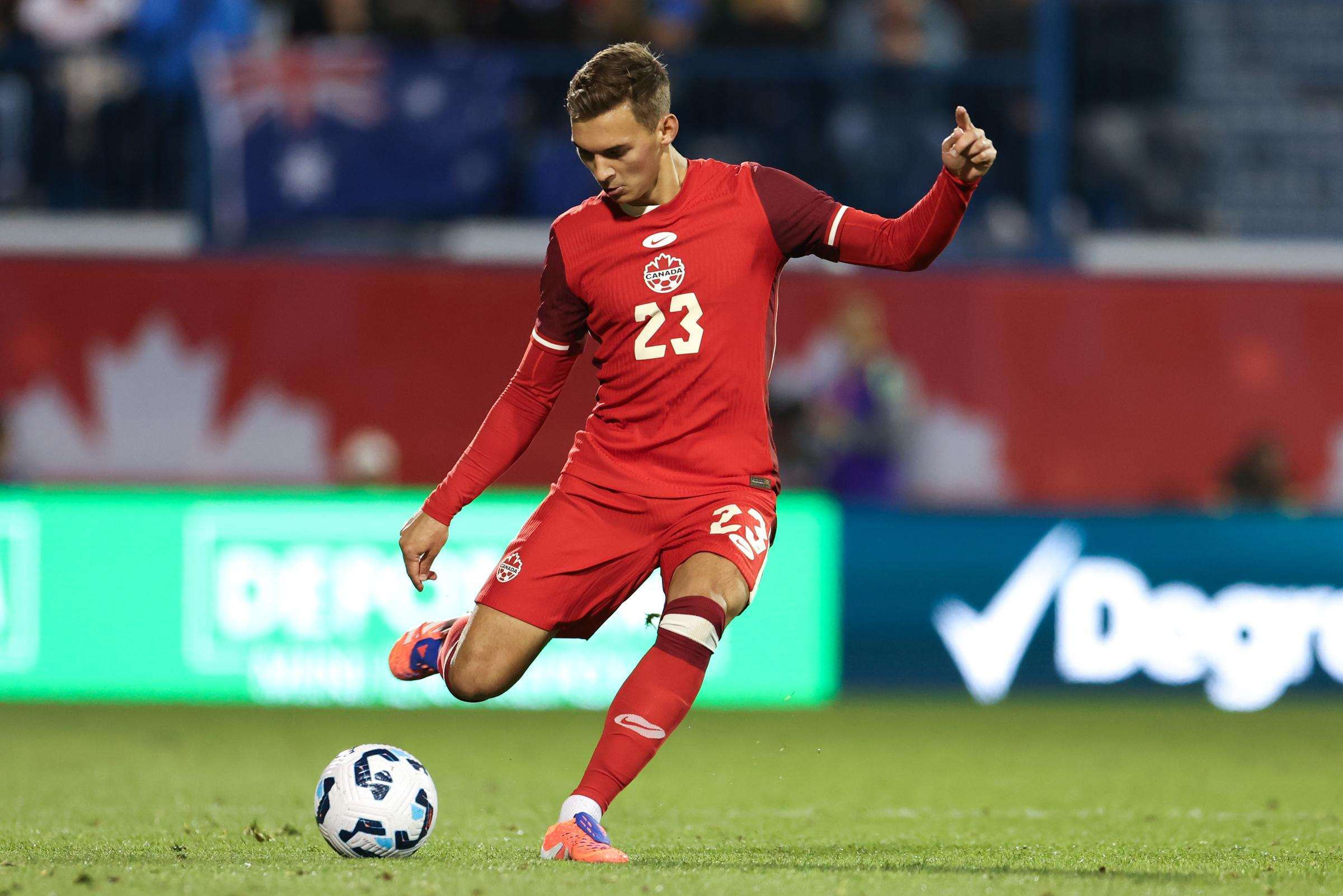
Uncapped/not yet committed
This category is largely self-explanatory and covers virtually every eligible player who has not yet featured for the national team but whose club performances suggest they could be on the national team's radar in the not-too-distant future.
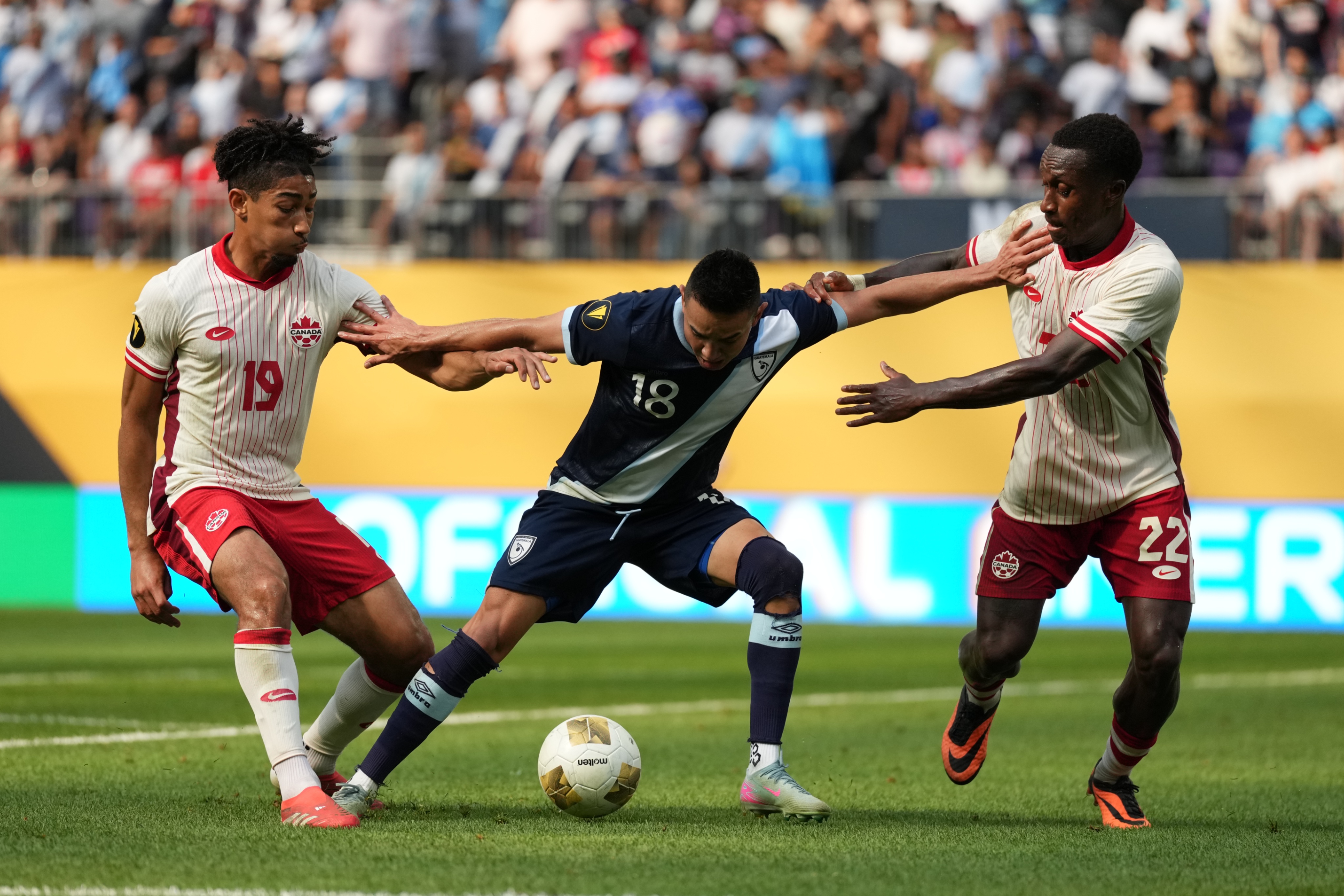
This grouping also features players not yet capped by means of playing in an 'A' category friendly, but who are eligible and seem to be willing to commit to the national programme. Note that 'B' match appearances, such as the Camp Poutine game against Guatemala in January, do not count towards official caps.
This category also covers quality players eligible for Canada who may or may not have expressed an interest in committing to the national programme and have not done so yet. This covers dual-nationality players not permanently cap-tied to another association. Currently, the only player on this list who meets this exact criteria is Luka Koleosho, who has just been called into the senior Italian squad, but for friendlies only at this time.
So in a nutshell, these are player prospects, usually young, but playing professionally — that is, not just a highly touted academy player.
Also note that this category is not intended to capture every Canadian eligible player in existence. That would be exhausting. The intent is to list a few representative players who may be most likely to be in the picture within the next few years or so.
Some quick observations to be made from this depth analysis. First, behind Canada's top-tier players, generally noted as Starting Quality and above on the chart, there is a notable drop-off in calibre. This has remained fairly constant since my first analysis in October 2024. However, that gap is closing, and may have been a contributing factor in Jesse Marsch's desire to extend his contract with Canada Soccer.
With only a day to go until Jesse Marsch announces his 26-man squad for the World Cup, it will be interesting to see who, amongst this chart, makes the final cut.
All in all, Canada enjoys quality among its top-tier players never seen before, but the depth behind them may not be as impactful as one would hope for, especially when viewed within the context of other World Cup-bound teams, even as the number of quality players available for selection in the player pool continues to expand.