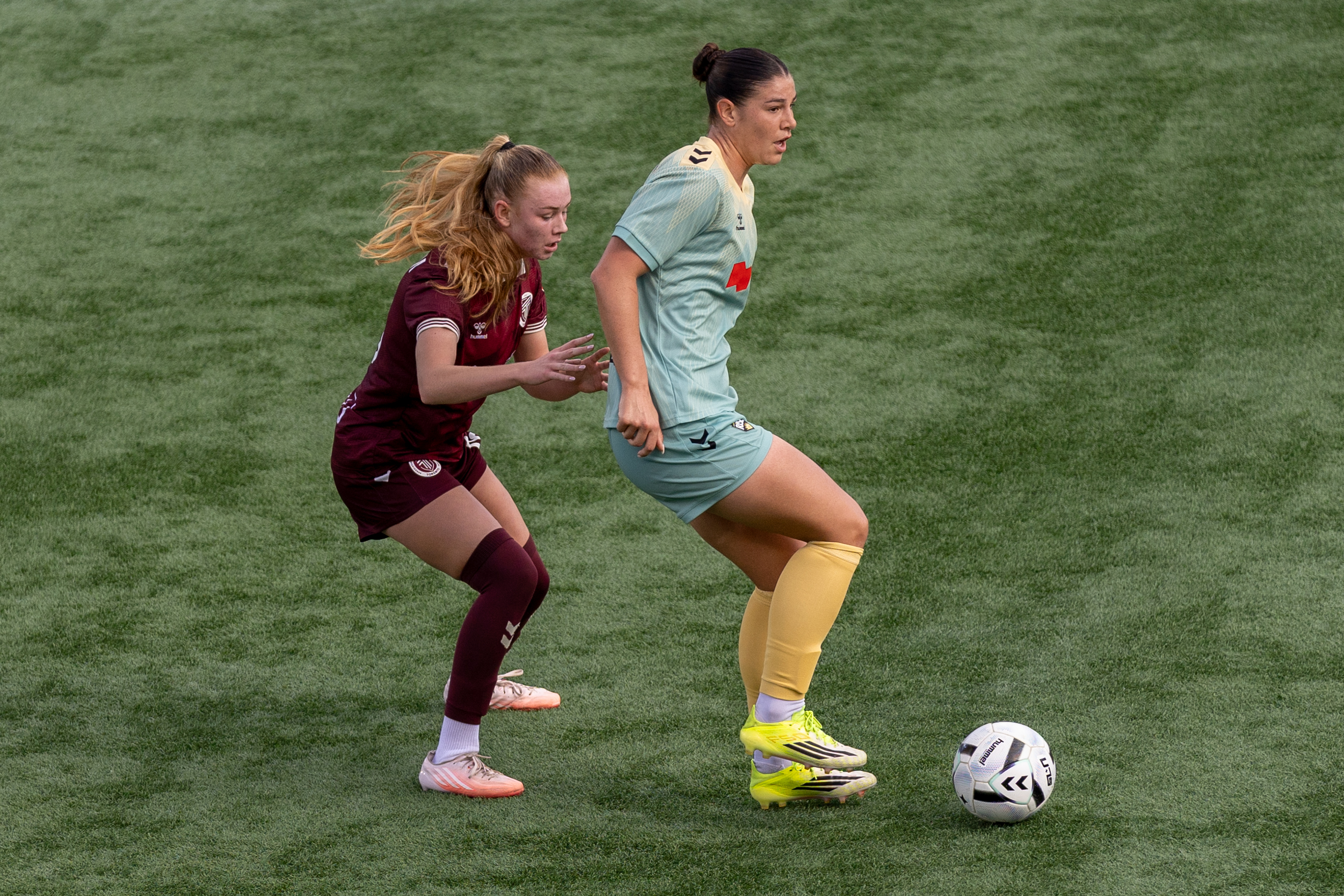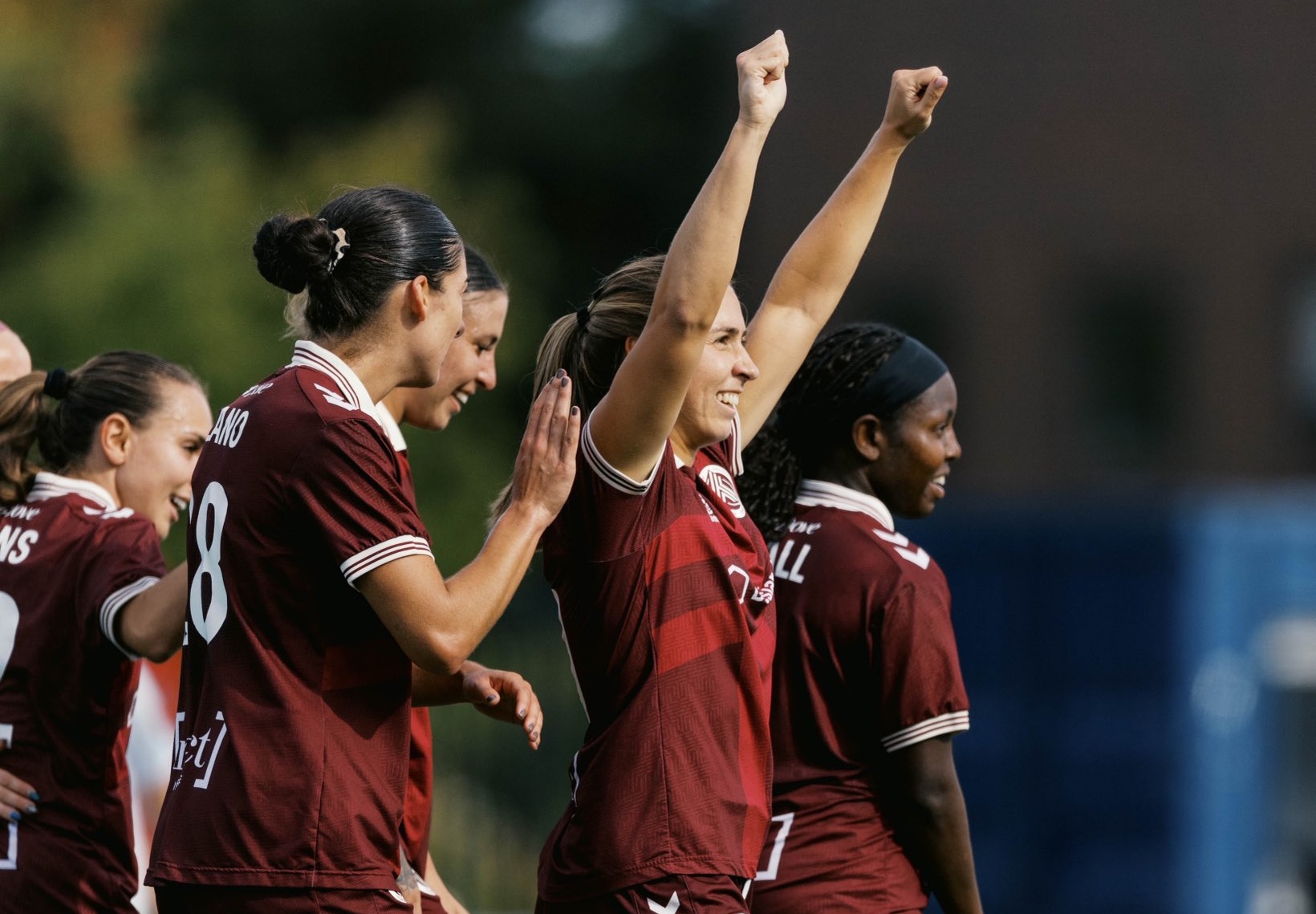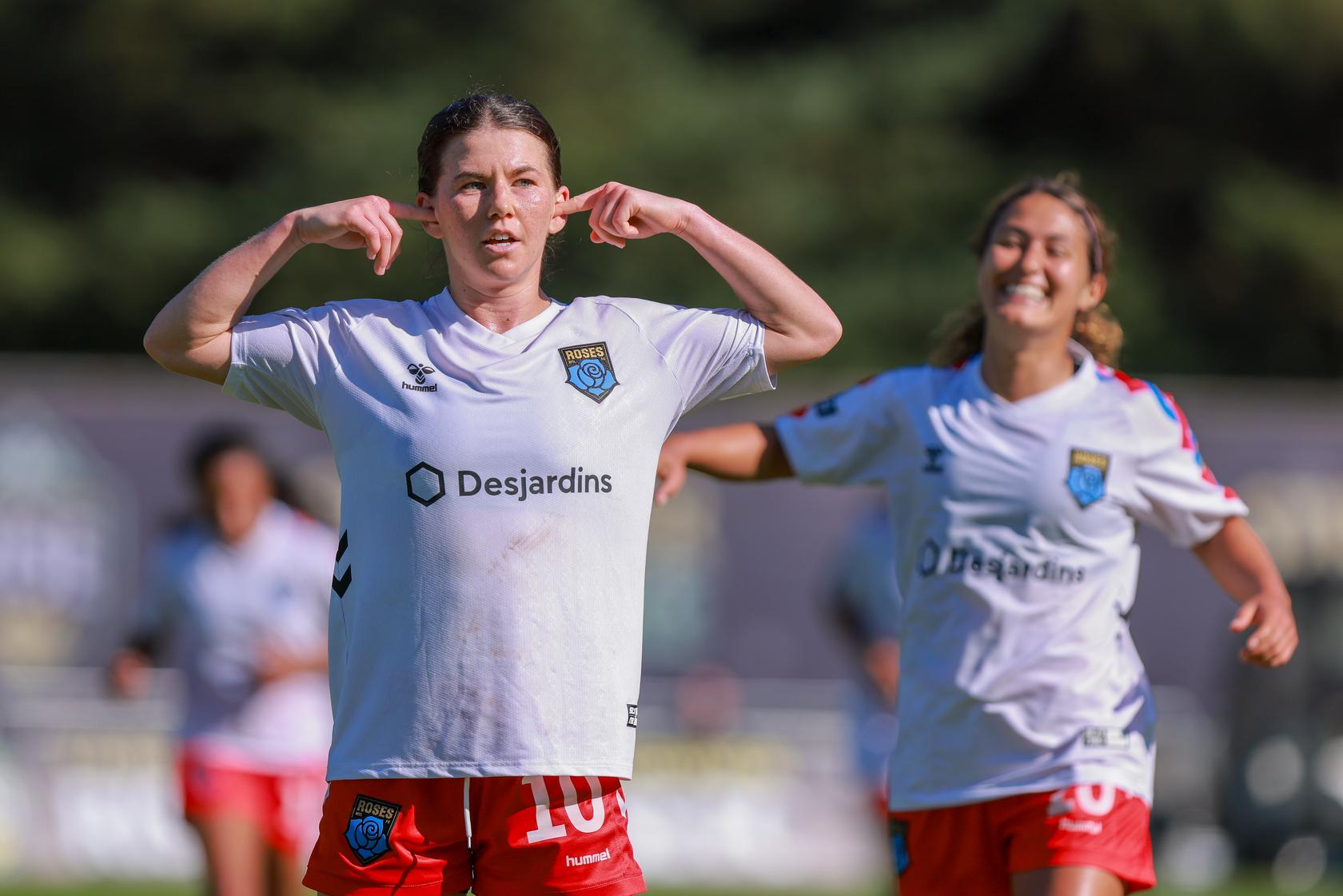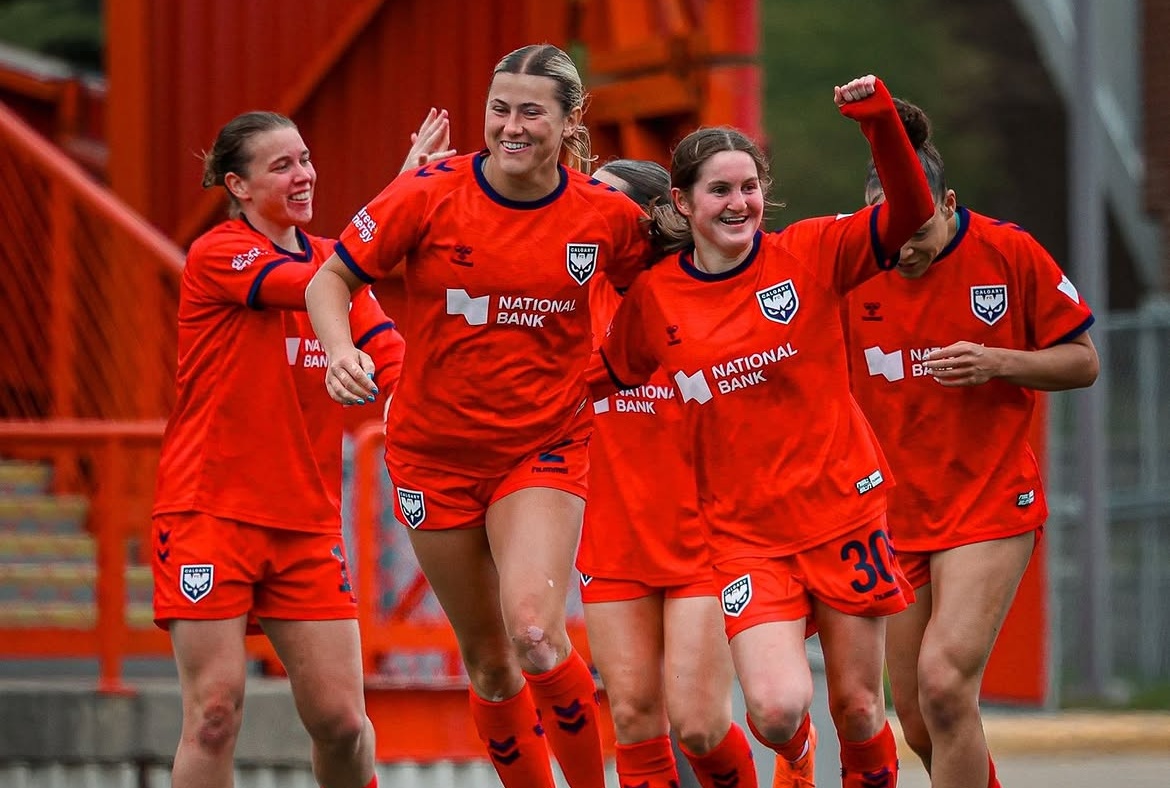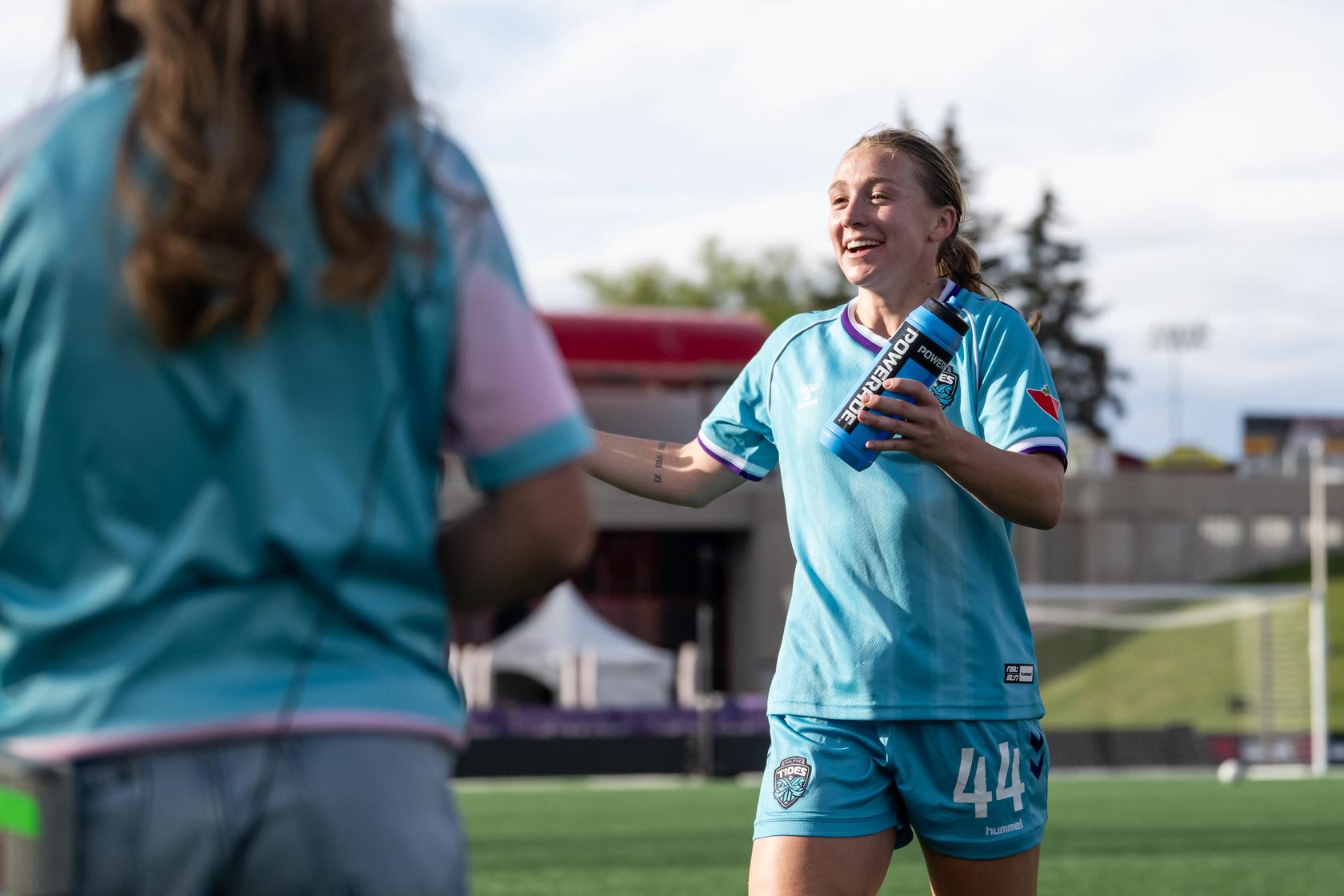
Last Friday, I had the chance to sit down and chat with Julianne "Jubes" Vallerand, the 24-year-old defender from Québec. Her prior experience includes playing at the university in West Virginia, playing semi-professionally in Québec before going fully professional with the Spokane Zephyr, and now with the Halifax Tides, where she played 12 games in 2025 and has started the first five games of the 2026 season.
The interview is presented as close to verbatim as possible with minimal editing.
With multiple experiences under her belt, the logical place to start was how she had adapted to different clubs and how much of a change it was mentally at each stage:
"Yeah, also while I was at university, I also trained with the semi-pro League One in Québec as well, so like in the summer I would go back and play there. But yeah, so like, honestly, it's pretty much similar in all teams. You know, West Virginia University kind of wants, at least where I went, they want to prepare you for the professional world."
"So a lot of what we did was, you know, all about discipline. You know, work ethic. It was definitely day to day was definitely different in university because we did have the season was shorter, so we had two games a week, which is a lot of load if you think about it."
"Now looking back like that is definitely hard to do, but very similar, you know. Like we study the teams that we're gonna play. We usually still try to keep our identity as a team, how we're gonna approach them. But yeah, even in Washington, going to Halifax, football-wise, not a lot changes."
"A lot of it, too, is me as a player and who I am and trying to keep my identity, and bring what I can bring. If a team brings me to their environment, it's because they like the profile that they see. And so I always try to bring that into a new team, but according to their tactical aspect of the game."
Did the transition to treating football like a job feel like a big change?
"I think it felt natural and I think it even was easier in a sense because it was my job and I could only focus on that, so, you know, in university, I think what was hard was, you know, balance school and you know, football and even the social life aspect of things. So I think transitioning to a professional team was actually essentially easier, because now I'm like 'okay, I can actually focus on that' and even better, like I'm getting paid to do that, which again is a great gift as well, because I just get to work in something I am so passionate about. So I would say like the transition was smooth. It was definitely, I think, nerve-wracking for my first professional debut, like I think the main difference is how, you know, I would say not just nerve-wracking but exciting at the same time, it feels like it means even more."
Vallerand got her professional start with the Spokane Zephyr, a newly formed professional team in Washington, in the US, though regrettably, they recently announced that 2026 would be their final season.
I was curious how it was to adapt to multiple cultures like that:
"It wasn't so much of a culture shock, no, because you know, going to West Virginia, growing up speaking French, that was definitely hard to, you know, learn the language and adapting that way, make friends and things like that. But going to Washington was also good for me, because I also had one of my best friends coming along that I knew for many years before, so it also made it easier."
She added that she has still followed the old team, as some of her friends are still in the USL Super League.
When asked about football culture in Québec growing up, she explained:
"Yeah, honestly, I grew up playing hockey and soccer, and I remember to me, playing hockey was really important too. I remember my coach at the time, like you know, I couldn't do both, so I had to choose, and I chose soccer because I feel like there were more opportunities in the football world than there were in the hockey league. Like I remember growing up playing hockey with boys, you know. At one point, I played with one female team for hockey, and I was like 'Wow, that's so cool,' but it didn't last long, but you know, I definitely think that the football culture and everything was kind of already established. You know, I would just go play in the streets or like go out to the football field and just have fun and play or watch football on TV as well."
Readers should bear in mind that while today the PWHL is growing explosively, the league is only three years old.
She added that she is a hardcore Habs follower in hockey — of course.
I asked what it was like to come into the Halifax team in the middle of the first year of the league's existence:
"So what I think is kind of like ironic is that I joined the USL, like the Spokane Zephyr team, when it was a brand new league, so that was the inaugural year. So I kind of did it twice, so obviously it meant a lot in the US. I mean, you know, the NWSL was already established, but to give more opportunities to players, especially in the US, because there's so many good players, yet not enough teams. So, like that was great to be a part of, but when I went to Halifax, that obviously meant so much more just because, like, I've been waiting for the day to have a league in Canada, and it's finally happening, and honestly, I just felt so grateful to be there.
No matter what, you know, the circumstances are, I already thought that the conditions were great for the first year, so yeah, it definitely meant a lot, and I was super excited to represent Halifax."
She clarified that she had no family connections to Nova Scotia, nor had she been to the city before, but one of her best friends already played there and was urging her to come up.
"So that was really exciting when I got there, like I just love the city, it's been great."
Vallerand is a player who has seen a lot of playing time. She played in almost every game of last year after arriving mid-season and has been a standard fixture in the back line this year. I asked how she sees where she is now as a player:
"It's definitely a good place to be, knowing I think they value me as a player and as a person. Like, I think I am very much valued, and they see my hard work, right? So I think, you know, I always strive to be better, for me, at the end of the day.
But I definitely think that they are clear on what they want, and I try every day to give that to them in the best way possible and in terms of who I am as a player and what I can bring to the table.
So I think it's been very good and the coaches have been really, you know, supportive as well and coaching me as well. Yeah, I just feel like it's been good so far."
If you have seen how much running Vallerand does each game, I think the work rate is beyond question.
I was curious about the team's back line and how that has come to work tactically:
"Yeah, I think we put a lot of work in during pre-season last year. Last year, I was playing on the left, so I was playing more so with Annie, and depending sometimes Addy was only left as well. But now I'm on the right side, and I'm adapting to playing with other players as well. But in pre-season, you know, we worked as a unit, and the cohesion is there, right?
Like we're supporting each other, and it's been very easy because everyone's just open-minded and willing to work with each other. Because we should emphasize our strengths and stuff, and I like to receive beyond the attackers' line, so like if I demand that from my centre backs, it is very well received and the same way, vice versa, so I think it's been good for us."
When you watch the Tides play, it's hard to miss that Vallerand tends to roam far forward to support attacks, despite nominally being a defender. I asked whether that was personal preference or a coaching choice:
"I think it's a little bit of both, but I will tell you, growing up, when I played football, like when I first started playing, I was a striker. So I feel like in my blood I was an attacker, you know? When I started playing for the national team, they saw me as a full back, and so they put me, they kind of transitioned me into that position. And so I had to learn it, which was fine but I also love the aspect of like, I can be a defender but support the attack as much as I want and knowing that is who I am as a player, I think the coaches see that and also want that and they want the overloads in attack and, you know, because that creates a lot of opportunities."
Having played in both versions of the team, I wondered how the team managed to rebuild its morale from last year:
"Yeah, I think there were a lot of changes, you know? Like, after the first season, there's not a lot of returners, which, like, feels like we're a new team in a way. Of course, we will try and keep our identity. But I feel like at the end of the day, one of my teammates said the other day, 'We need to kind of have the memory of a goldfish,' like yeah, we lost the last game, but we need to learn from our mistakes, of course and like study them. But also be able to move on quickly because that doesn't define us.
Obviously, Vancouver, I thought was a lucky win for them, in a way, because if I look back, I feel like if you look at the stats, we had way more opportunities."
The game referenced is the loss to Vancouver, courtesy of a penalty kick, despite a strong performance.
"I do feel that's also where our confidence comes from as well, because I think if you compare it to last year, we weren't really producing expected goals, right? We didn't really create that many opportunities, and when you look at this year, what's different is that they're there. We just need to like finish, so I think if we just keep that mindset and build from that.
But like in pre-season, we put a lot of work into having a good team atmosphere and good chemistry, so it translates to the field as well."
As a player, she has not only played in two countries but has also gotten the chance to represent her country at the national stage. Reflecting on that experience at the age of 15 and what that means at that stage in life, she said:
"You know, growing up, I just loved this sport. I just love playing football. I never realized how much it would be part of my life. No, I don't think until I got called up with the national team and then like universities reaching out to me, and I was like, 'Oh, maybe I am good at this sport! Maybe I should pursue something like that.'
"It wasn't something I dreamed of because it wasn't a possibility to play professional football in Canada, like that wasn't a dream of mine because I had never seen it. However, after many camps with the national team, I was like okay, what can I do to be a professional football player and so then that kind of brought me to where I am today."
On the chances to travel the world with the national team:
"It was amazing to say the least, being able to just travel the world, you know, I went to China, I went to Central America, like Nicaragua, which turned out to be a little bit dangerous so we had to flee but other than that, no, like we went to Uruguay as well, like the World Cup was definitely one of my best highlights ever. I still remember how it felt to play against Germany.
So I think it was great. It was amazing, and I am really grateful to have had these experiences, of course."
The U17 women's championship was cancelled in 2018 due to unrest in Nicaragua.
Was the international call-up then what unlocked the possibilities as a future player?
"Yeah, it's definitely, you know, they don't really tell you how to go pro, right? I think this transition of being in university and then going pro, I feel like there's a little loop in there in the sense that you need to find an agent, and how do you do that, right?
I feel the support around that is not always there, because you don't know which agent is good, which agent is not and then like, where do you want to play? And you also need to do kind of your highlight tape and then reaching out to clubs as well."
"So it's definitely not an easy process, of course, but of course I try to reach out to the people that I knew who had been there before or had like the resources as well."
She went on to discuss when she arrived in Halifax:
"I remember when I met with Stephen (Hart), they meet with you because they want to know what kind of person you are, because I think that is also a very important thing for a club to know, like they want to bring good people."
"It's just really being who I am and sharing my thoughts and just having a conversation with them so they get a sense of who I am and I get a sense of who they are as well."
With that experience of seeing the world, I was curious whether she had given thought to future opportunities around the world:
"You know, this world is full of possibilities. I never thought that I would be back home. Like I kind of used to think I wanted to go to Europe and see what it's like over there, because I really like the culture of football over there. Honestly, that's all they think about, which I love.
To me, it's really just keeping my door open always, in a sense that I'm not restricted to any area."
We touched briefly on the rise of women's professional football in North America:
"When I was growing up, it wasn't necessarily something you knew that you could do. And now it is like blowing up, which is amazing, because you see all these kids coming out to our games or just even people coming out to our games and being so supportive here. So you can see that it is having some impact on these people's lives, and that's really good to know.
I think what's also been eye-opening to me as well is like it's not just little girls. Like I'll find shirts, and it's also little boys, which I think is great. I think that just speaks a lot, and yeah, I just think it's cool to see them coming to our games and supporting us."
So, how does she feel about the support in Halifax?
"Yeah, honestly, one of my favourite things about playing at home is the fans. Like, without a doubt, because especially last year, when obviously we had a tough season. They kept coming out, and sometimes you know, I talked to the fans, and I am like, 'Man, I am sorry we lost,' you know? Like that's tough and they are like 'oh my god, we look forward to this day all week, and we are just happy to be out here and supporting you guys' and again, that stuck with me because I am like, yeah, it is so much more than just winning at the end of the day."
"Like they are here having a good time, I am having a good time playing. Of course, I want to win, but at the end of the day, you know, I'm playing, and I am doing what I love. So I think it's one of my favourite things here in Halifax."
As closing comments, she confirmed that she thinks the teal home kit is amazing and that she likes to watch the Premier League and USL, as well as a bit of NWSL.
Final statement?
"For the fans, I think we wouldn't be here without them. I think it is very important for us to have them supporting us and being there. And again, it means so much to us, I couldn't say that enough."
One thing is certain: Vallerand will be a player to watch all season, so get out there and show your support.