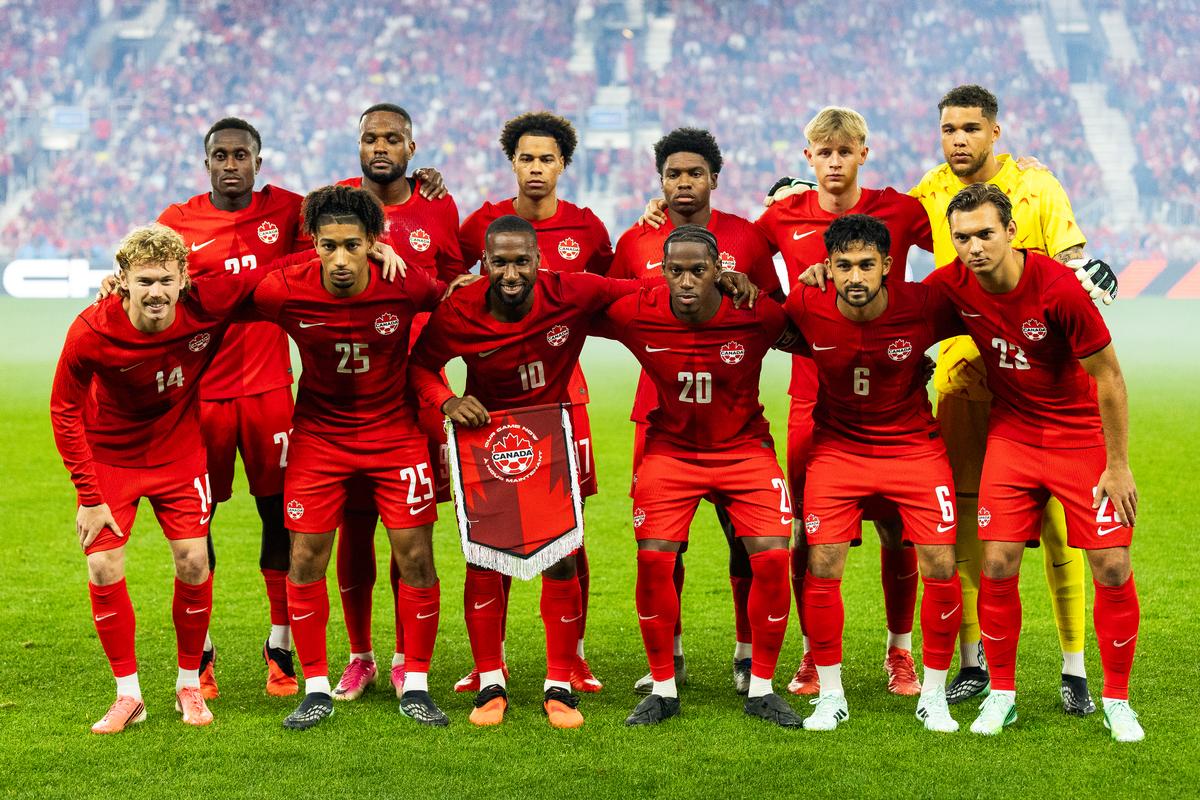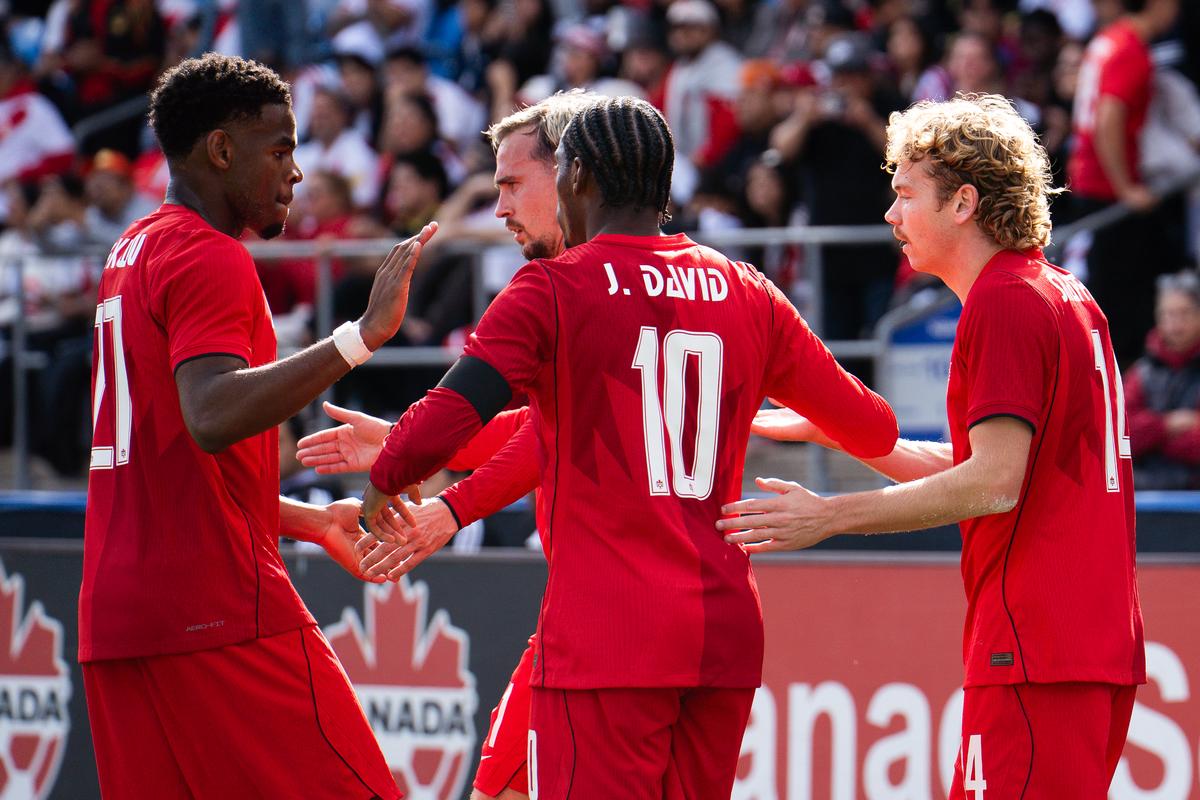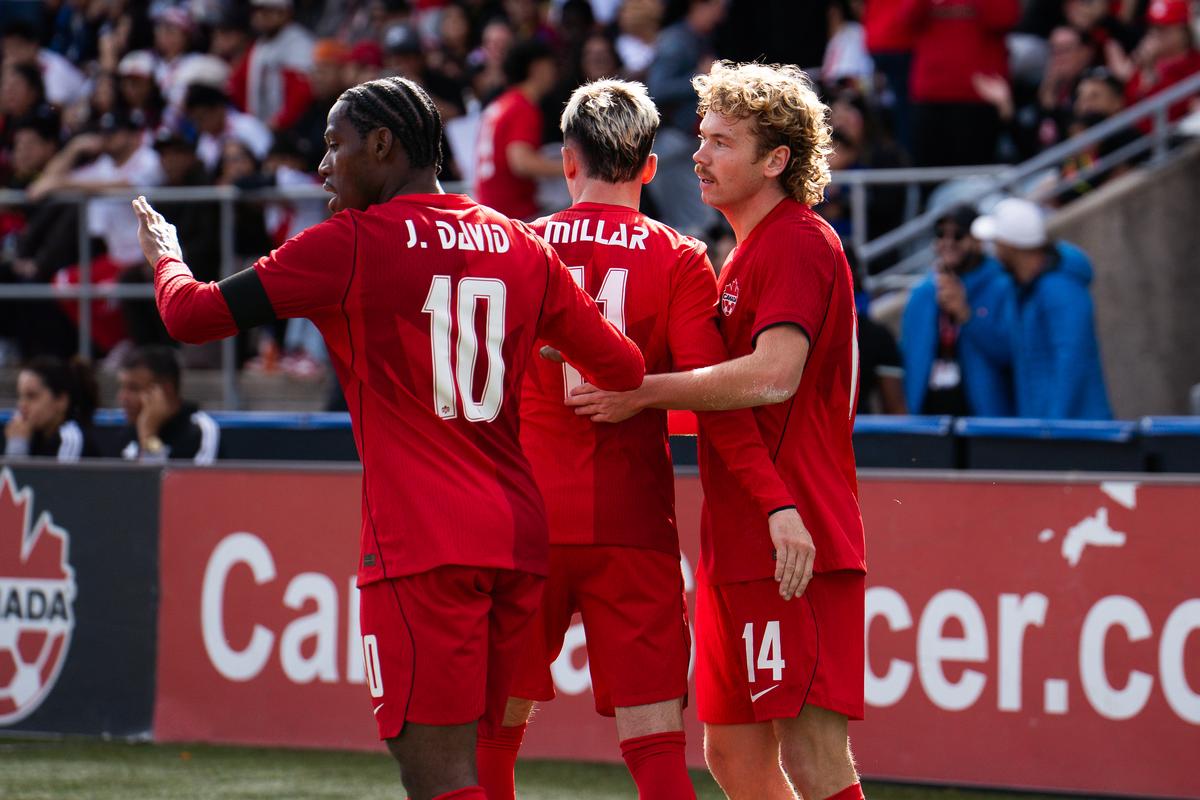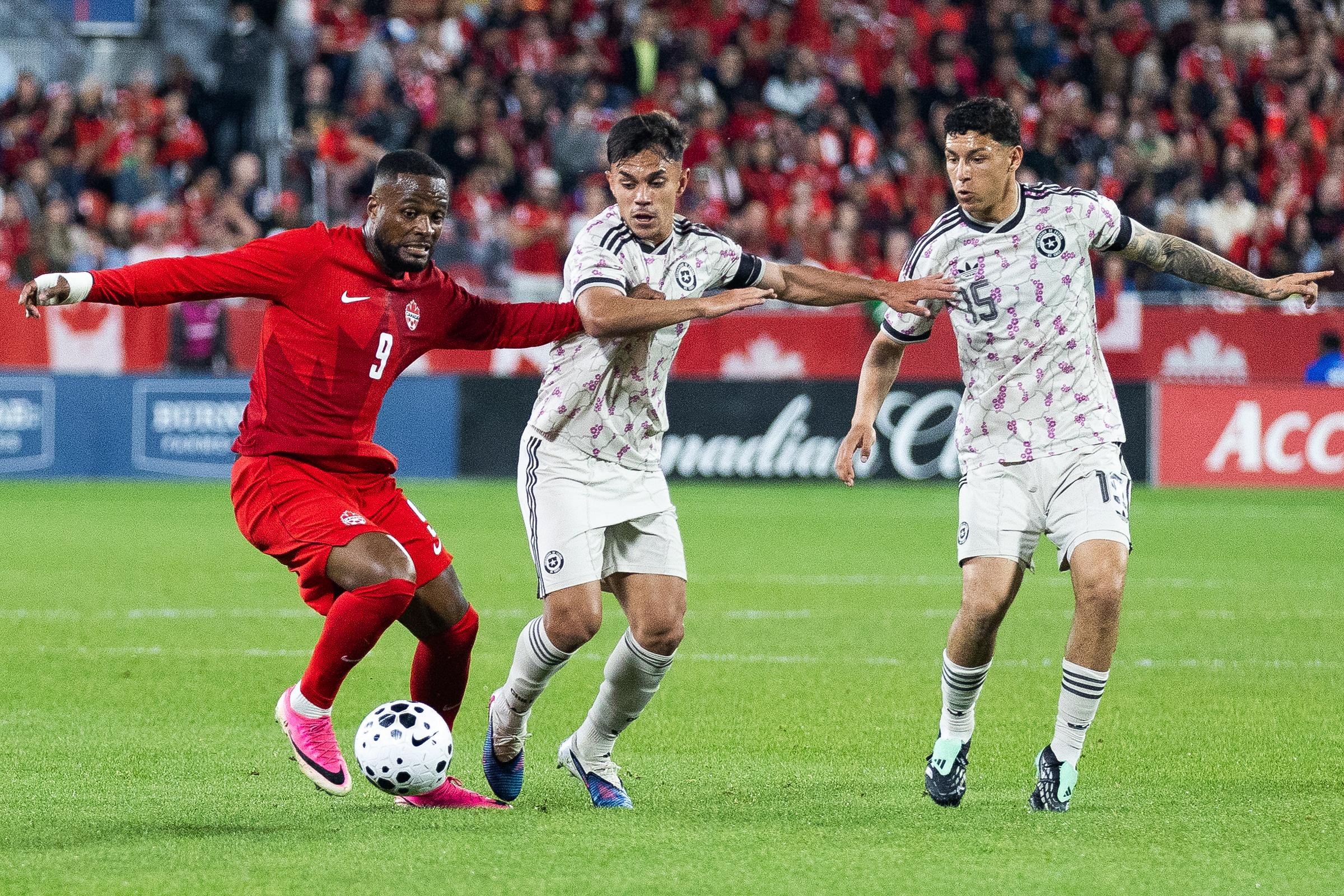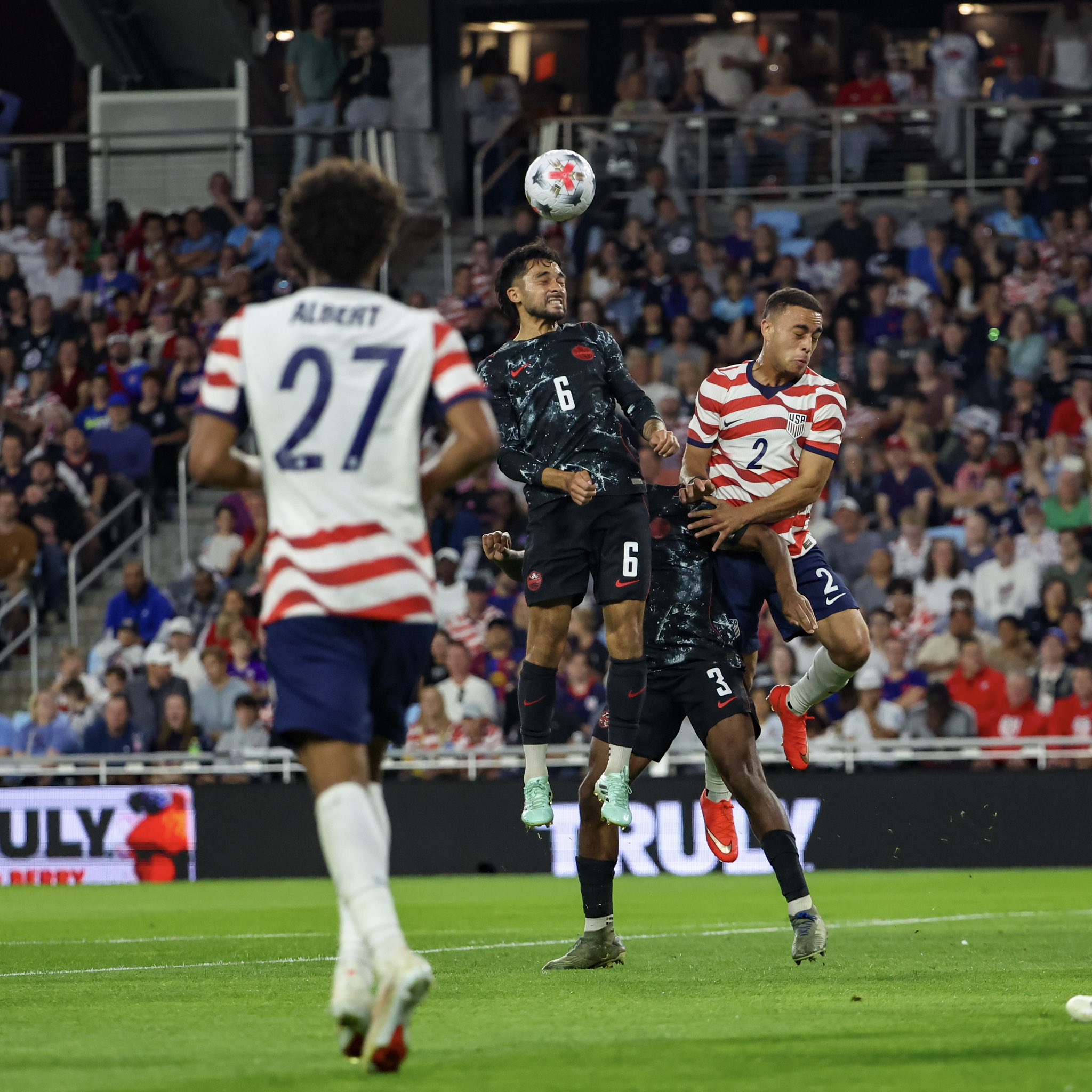


The Canadian men's visit to Saint Paul, Minnesota, to take on a US team on a roll ended in a 1-0 defeat to their southern neighbours. It was not how Jesse Marsch and the Canadians wanted to end the window, after they had won their previous two games handily, even if the scores were modest. Even in their favoured black ice kits, they couldn't overcome a feisty opponent with a squad full of young faces.
Our starters for tonight’s tilt, presented by @GE_Appliances
— CANMNT (@CANMNT_Official) October 6, 2026
🍁Dayne and Tani start in Minny
🍁Liam and Shaff provide width
🍁Staqs wears the armband
🇨🇦 🇺🇸 #CANMNT pic.twitter.com/yhn9rlr2EG
Canada manager Jesse Marsch opted for what he thought was his best possible XI for the game. Former Minnesota United stars Dayne St. Clair and Tani Oluwaseyi started at their old home field.
North Stars & Stripes ⭐️#USMNT x The @HomeDepot pic.twitter.com/44ctl2kczc
— U.S. Soccer Men's National Team (@USMNT) October 6, 2026
American manager Pochettino also put out a strong starting XI for the roster he assembled for the window. He began the match with two teenagers up front, with 17-year-old Mathis Albert on the right wing and 19-year-old Justin Ellis at striker.
The game was cagey in its opening ten minutes, with most of the play contested in the middle of the pitch. Canada were first to carve out an opportunity in the tenth minute when Jonathan David shook off an American defender and passed across the top of the box to Oluwaseyi, but his shot was well wide of Brian Schwake's goal.
Only a few minutes later Canada was awarded a set piece after Jacob Shaffelburg was fouled on the left side. Canada, through Stephen Eustáquio, tried another imaginative set piece, but Liam Millar's shot was underhit and wide.
The game was becoming a physical affair with both teams trading fouls. It was hard to tell whether this was by design or the result of both teams' players being fatigued after their recent games 72 hours earlier.
The US took a 29th-minute lead on their first real attack on the net. Up to this point, Canada seemed to have a slight edge in the play. However, Alex Freeman got past Shaffelburg and Laryea and was in clear after Priso got pulled out of his spot on the line chasing the American fullback's one-two pass with a teammate. Freeman's whipped shot/cross was met by striker Ellis in front of the goal, leaving Dayne St. Clair with no chance. There may have been a hint of offside by Ellis, but the goal stood with no VAR to intervene. It was the first goal Canada had conceded in this window.
The @OrlandoCitySC connection in full flow.
— U.S. Soccer Men's National Team (@USMNT) October 7, 2026
FREEMAN TO ELLIS TO PUT US IN FRONT!#USMNT x @VW pic.twitter.com/rlULMkHemx
In the 35th minute, Eustáquio received a lay-off pass from Jonathan David, but his shot from well outside the box did not trouble Schwake, and the keeper safely gathered up the ball.
There was some concern for Canada when Eustáquio went down after a hard challenge by Reyna in the 40th minute. The foul earned the American a yellow card as Eustáquio lay on the ground holding his shoulder. The Canadian captain had also taken a beating after Malik Tillman landed on him following an earlier hard foul. Eustáquio stayed on but left at the interval.
Canada were down 1-0 to the US at the break after a Justin Ellis goal that had a hint of offside. The game was devolving into a gritty, physical battle that started hopefully with Canada on the front foot, but the US took control after their goal. Canada's midfield and back line endured more pressure and physical challenges than in the previous two games against Chile and Peru.
Worryingly, the Canadian attack and overall drive began to fade as the half went on. Up to this point, the US enjoyed 60% possession but had just one shot on goal to show for it. The American size advantage and physical approach also appeared to be having an impact. It was evident that Canada could use more size up front and at the back.
Marsch started the second half with just one change, bringing in Mathieu Choinière for the banged-up Eustáquio. Eustáquio had scans in a local hospital after the match. His counterpart Pochettino made three changes, removing Giovanni Reyna, Yunus Musah and Justin Ellis in favour of Sergiño Dest, Sebastián Berhalter and Julian Hall.
Canada Soccer tells OneSoccer’s Kristian Jack that Stephen Eustáquio underwent an X-Ray on his shoulder in Minnesota following a clash in the #CanMNT’s match against the USMNT and it “does not appear to be serious”.
— OneSoccer (@onesoccer) October 7, 2026
“Stephen will return to Swansea to undergo further assessment… pic.twitter.com/KSwy3aGkvW
Les Rouges returned to driving the play in the second half and had five corners in the opening 13 minutes alone. However, Canada's lack of size was apparent as the US easily cleared every ball sent in by Choinière. Curiously, with Canada's taller personnel still on the bench, the set pieces reverted to predictable lobbed balls into the box that the Americans cleared with ease.
Canada's best chance came from a set piece taken by Choinière in the 63rd minute after Priso was brought down by Tyler Adams inside the American half. Choinière's lobbed ball over the US line found an unmarked Luc de Fougerolles running towards the left of Schwake, but the young centre-back's volley came back off the crossbar. Post-game, de Fougerolles admitted it was a sliced pass and not intended as a shot.
Luc De Fougerolles comes *this* close to an equalizer🥲
— OneSoccer (@onesoccer) October 7, 2026
🔴Watch #CanMNT on OneSoccer pic.twitter.com/wnUzT7f4xX
Marsch made another two changes in the 65th minute, bringing in strikers Daniel Jebbison and Jacen Russell-Rowe for Millar and Oluwaseyi. The change almost paid immediate dividends as Jebbison put American centre-back George Campbell under pressure, forcing the former CF Montréal player to narrowly miss putting the ball into his own net.
In the 71st minute, American teenager Julian Hall, who had scored in the three previous games this window, found his way past the Canadian defence after Priso got caught out playing a high line, but the American striker's shot found the side netting.
A minute later Marsch reached into his bench for the fourth and final time in the match as he introduced Promise David to replace Shaffelburg. In a peculiar tactical approach, Marsch was now going on the attack featuring four strikers, as Promise joined Russell-Rowe, Jebbison and Jonathan David.
Canada had their last decent scoring chance in the 79th minute after Jebbison beat his man on the right wing and whipped a cross towards goal that found Promise David, but his powerful header was well short of the near post. The striker was visibly disappointed with the outcome.
From here, the game largely plodded on to its inevitable conclusion, including four minutes of added time. The second half offered isolated chances, but they were too few, even though it was better overall than the first. Ultimately, the game looked like it had been contested by two exhausted and sometimes disinterested teams, despite the chippiness.
Canada finished with 49% possession, but their three shots on target never really challenged US keeper Schwake. The US did not threaten the Canadian net often and were penned into their half for much of the match, aside from the 15 minutes following their goal. But in the end, the Americans made the most of their only shot on target and came away with the win.
The game was physical, as Canada versus United States games have often been of late as the rivalry develops further. The US were fouled 13 times in the first half while Canada were fouled ten times. However, the numbers reversed in the second half, with Canada being fouled 12 times to just eight by the US. Both teams were issued a pair of yellow cards in the match.
Among his post-game comments, Jesse Marsch stated, "I thought both teams went after the game, but in a good way. I thought it was a respectful match. I thought it was a good match, and I give credit to the way the US defended — specifically, they were bending, but they didn't break."
There weren't many lessons to take from this game for either team. While neither team was willing to give an inch, neither was willing to show their hand with a likely Nations League clash on the horizon in the new year.
Pochettino made eight changes, including handing a first cap to Cole Campbell, the 13th American to receive one in this window. Marsch, on the other hand, made just four changes and left Jonathan David, Nathan Saliba and his entire back line on for the full 90 minutes.
The match was disappointing because it lacked the trend of introducing younger players and meaningful tactical experimentation. It was disheartening that young players Jovan Ivanišević, Jamie Knight-Lebel and Justin Smith were kept on the bench in a game that meant little, aside from giving Canada's depth a chance to gain experience.
The game also showcased Canada's profligacy in the attacking third yet again. Despite controlling many passages of play and keeping the American attack at bay — with the one exception that led to their goal — Canada continued to struggle to score.
A trend that may frustrate Marsch, who added, "We controlled a lot of the match; we just didn't turn our good play and our organization into enough chances and into goals." He added, "We've been having this talk for a while, right? And we need to find ways to be more effective in the last third."
Canada finished their international window with two wins and a loss. While the defence held firm, allowing just one goal despite the litany of injuries that fell upon the squad, the attack had only three goals to show for itself. That will be top of mind as Canada prepares to face Guatemala in a home-and-away series in the CONCACAF Nations League quarter-finals in November.